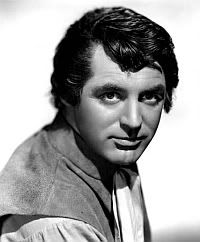
I mentioned several months ago that Spencer Tracy spent the early years of his career at Fox, before coming to MGM where he became a big star. Some of those Fox movies, however, are quite good, and one of the best, Dante's Inferno, will be airing at 7:30 AM ET on March 1 on the Fox Movie Channel.
Tracy starts off the movie playing a ship's stoker, but gets himself fired, before getting a job being a carnival barker for veteran character actor Henry B. Walthall. Walthall's carnival "ride" is a re-enactment of Hell, designed as an educational and cautionary experience for its viewers about how they need to be more virtuous in their lives. Tracy, however, has other ideas. He sees the exhibit as too bland, and figures that it needs to be spiced up to bring in the patrons. This sets Tracy off on a journey not only toward immense wealth, but immense tragedy as well. Perhaps he should have heeded the lessons of The Inferno.
Spencer Tracy is quite good in Dante's Inferno, and it's quite easy to see why he was about to go on to bigger and better things in his career. However, there are more interesting things to the movie. There is some very good art direction, both involving the elaborate carnvial rides, and a climax involving a gambling ship that catches fire. In the middle, there's an outstanding dream sequence involving Tracy's vision of Dante's Inferno, after Walthall gives him a copy of that book.
Also interesting is the supporting cast. While this is Tracy's movie all the way, Walthall is notable, as is the woman playing his daughter (and eventually wife to Tracy). That's Claire Trevor, a dozen years before she won an Oscar for her role in Key Largo. Even more interesting is Marguerita Cansino, who shows up briefly as a ballroom dancer aboard Tracy's gambling ship. You may not recognize that name, because it was changed to further the actress' career. The changed name: Rita Hayworth.
This is the sort of movie that Fox really need to put out on DVD. They've got a rich library, and with a name like Spencer Tracy heading the cast, Dante's Inferno would be of interest to a lot of classic movie buffs, as well as possibly to the more casual fan who might not recognize other names of the 1930s. Sadly, though, it's not on DVD, meaning you have to look out for it on the Fox Movie Channel.
Saturday, February 28, 2009
More young Spencer Tracy
Posted by
Ted S. (Just a Cineast)
at
1:19 PM
0
comments
Labels: Fox, please release me, Spencer Tracy
Friday, February 27, 2009
Presidents' Day: The Final Chapter
I didn't really discuss fictional presidents much in my previous Presidents' Day posts, other than to make brief mention of the 1964 movie The Best Man. I can go into more detail now, as The Best Man is airing overnight at 2:30 AM ET on TCM.
Henry Fonda and Cliff Robertson play two presidential candidates. They're members of the same party, and the convention has arrived, but neither has locked up a majority of the delegates. This, of course, means that there is going to be horse trading with the candidates who came in third or worse, but collectively earned enough delegates to block the top two candidates from having that majority. As such, The Best Man is an interesting look at what goes on behind the scenes.
The performances are all quite good, but unfortunately the story takes clear sides. Henry Fonda plays the candidate from the party's (it's never mentioned which party's convention this is) more liberal wing. However, he's got some skeletons in the closet, namely in the form of mental illness. Robertson, from the party's anti-Communist wing, is portrayed as having no scruples whatsoever, and has no problem about using Fonda's past against him. For this, the dying ex-President (Lee Tracy, formerly of Dinner at Eight), has no respect for Robertson. However, Tracy has no respect for Fonda either, as Fonda seems unwilling to stand up for what he believes in. Still, the screenplay, written by well-known author Gore Vidal (who was also well-known for his left-of-center political views) makes Fonda out to be almost pure, to the point that we're obviously supposed to root for him and not Robertson. This is the one flaw of the movie, and while it is substantial, the movie as a whole is still quite good, and keeps the convention's outcome in doubt until the end.
There are a lot of good supporting performances buttressing the fine work of Fonda and Robertson. Kevin McCarthy (Invasion of the Body Snatchers) plays Fonda's campaign manager. There's also Edie Adams as Robertson's wife; Mahalia Jackson opening the convention with a song, and correspondent Howard K. Smith playing himself. These last two lend an air of docudrama to the movie, which serves it quite well.
The Best Man is an interesting, if imperfect, look into political intrigue that is in some ways relevant still today. True, candidates' dirt comes out well before the convention, but the politics is still just as dirty. Barack Obama had no qualms whatsoever about using his surrogates to portray Hillary Clinton as racist every time her campaign criticized him, and then had no problems speaking out of the other side of his mouth, calling himself post-racial.
Posted by
Ted S. (Just a Cineast)
at
1:49 PM
0
comments
Labels: Cliff Robertson, Henry Fonda
Thursday, February 26, 2009
Betty Hutton, 1921-2007
Today marks the anniversary of the birth of actress Betty Hutton. Probably her best-known movie today is The Miracle of Morgan's Creek, from which this photo with actor Eddie Bracken was taken. She was also in the Oscar-winning The Greatest Show on Earth; but I'd like to recommend a different movie: The Stork Club.
Hutton plays Judy Peabody, a hat-check girl at the famous Stork Club, a New York City nightclub. She's got a boyfriend who's currently overseas in the army. One night, Judy happens to see an old man fall off a pier into the river. She jumps in to save him. What she doesn't know is that the man she's saved is wealthy lawyer Jerry Bates (played by Barry Fitzgerald). He wants to thank her properly, but doesn't want her to know whom she saved, so he anonymously sets her up in one of the finest New York apartments money can buy. Needless to say, this causes problems for Judy and her boyfriend once he returns....
The Stork Club is a very light comedy, of the sort that was popular in the 1930s and early 1940s. The story line is at best a stretch, but it's the sort of thing that audiences of the day wanted. Hutton and Fitzgerald both do a good job in giving the 1940s audiences what they would have been looking for, although nowadays, the movie would seem not just old-fashioned, but with all of the bad connotations and none of the good that old-fashionedness implies. This is in contrast to something like It Happened One Night which, while clearly a product of the 1930s, is more "quaint" than "old-fashioned" in that it's still fresh today. In short, if you're a fan of classic movies or a fan of Betty Hutton, The Stork Club is a good diversion. If you want to introduce people to Hutton, start with The Miracle of Morgan's Creek.
For those who are fans of Hutton and 1940s movies, The Stork Club is available on DVD.
Posted by
Ted S. (Just a Cineast)
at
2:32 PM
1 comments
Wednesday, February 25, 2009
Dr. Ehrlich's Magic Bullet
Last August, I briefly mentioned the 1940 movie Dr. Ehrlich's Magic Bullet, in which Edward G. Robinson plays the German scientist who finds the first effective treatment for syphilis. It's airing tonight at 6:00 PM ET. Unfortunately, it's not available on DVD.
Posted by
Ted S. (Just a Cineast)
at
9:55 AM
0
comments
Tuesday, February 24, 2009
Mardi Gras
Today is Mardi Gras, or Fat Tuesday, the last day before the Catholic fasting season of Lent. No, this is not a post about Tuesday Weld, although I wouldn't mind seeing the dreadful college comedy High Time again. It stars Bing Crosby as a widower who goes to college and swings with the young'uns, including Tuesday Weld. Yes, it's as bad as it sounds, and that's probably why it's not available on DVD.
Instead, I find myself thinking about some of the movies set in New Orleans, the city that gives us the ridiculous Mardi Gras celebration every year. One of the best is King Creole, in which Elvis plays a young man whose singing contract gets bought by a mobster, with disastrous consequences. Presley is excellent here, showing that he really could act.
An interesting New Orleans-style funeral occurs near the beginning of the James Bond movie Live and Let Die, as a funeral band marches down the street, carrying a casket. Of course, the funeral procession is actually for somebody standing on the sidewalk, about to become the victim of an espionage hit.
Hollywood made some movies about New Orleans during the studio backlot era, too. Probably the best of these would be Jezebel, with Bette Davis as a southern belle in love with Henry Fonda. It's got a pretty good Bette Davis rant. She's going to a party, and is supposed to be dressed in white as an unmarried woman. She insists on wearing a red dress, though, and when her family complains, she responds, "This is eighteen fifty-two! Not the Dark Ages!"
Posted by
Ted S. (Just a Cineast)
at
2:50 PM
0
comments
Monday, February 23, 2009
Game Shows and the movies
I've mentioned that I'm a game show fan. Even in spite of the success of Slumdog Millionaire, TV game shows aren't the easiest thing to write movies about, largely because the real thing is more interesting than the movie version. (Anybody who's yelled answers out at their TV will know what I mean.) Quiz Show, about the game show scandals of the 1950s, is probably the best known.
However, several prominent game show hosts appeared in movies as actors. There are, of course, the people who were originally actors, and then went on to host game shows. Richard Dawson was a TV star on Hogan's Heroes long before he hosted Family Feud; or you might recall that Groucho Marx had a comedy act with his brothers long before hosting You Bet Your Life.
But some of the people whose best known work is as a game show host also made some movies. Peter Marshall started off as part of a nightclub act with Tommy Noonan long before he became the host of The Hollywood Squares; in between he appeared in a few dreadful movies such as The Rookie.
If you watch Gregory Peck's biopic of Douglas MacArthur, keep your eyes open: the original Jeopardy! host, Art Fleming, has a brief role.
More interesting are the movies of Dick Clark. Host of several incarnations of Pyramid, it was his job as host of American Bandstand that probably got him his first big movie role, that of a young teacher in the high-school drama Because They're Young. Clark tries, but fortunately, the focus of the movie is more squarely on the students. Amazingly enough, it got him another acting gig, in the medical drama The Young Doctors. It's a movie about a hospital pathology department that's saved by a fine performance from Fredric March. Don't watch it for Clark, unless you're also a game show fan. You'll end up laughing at how stilted his performance is. Perhaps unsurprisingly, neither of Clark's movies are on DVD.
Posted by
Ted S. (Just a Cineast)
at
1:36 PM
0
comments
Sunday, February 22, 2009
And the Oscar goes to...
So the Academy Awards are being handed out tonight. There's that little statue, and before that, the red carpet down which all the celebrities walk on their way into the auditorium. I've already commented on my not caring so much about the production of awards shows, and as a fan of classic movies I'd generally rather watch older stuff anyhow.
The statuette itself has appeared in a number of movies, although the Academy holds the rights to its image, so any moviemaker who wants to use it is supposed to get permission from the Academy. If you watch The Bad and the Beautiful, you'll see a title card at the end thanking the Academy for allowing the moviemakers to use the Oscar statue as part of the story.
Technically, every time you use the word Oscar to refer to the statuette, or the term Academy Award, for commercial purposes, you're supposed to use one of the trademark symbols. Thankfully, though, blog posts would fall under "fair use" provisions. Whether Mommie Dearest, as a biopic, would be subject to the Academy's imprimatur is an interesting question. After all, it's a matter of public record that Joan Crawford won an Oscar..
Red carpets show up in classic films as part of the dramatization of movie premieres. There's a famous scene at the end of the 1937 version of A Star Is Born, with Janet Gaynor and Adolphe Menjou walking down the red carpet together, after Andy Devine and Mae Robson. If you don't want to wait that long for your red carpet, you might want to watch Singin' In the Rain, where the red carpet shows up at the beginning.
Posted by
Ted S. (Just a Cineast)
at
2:28 PM
0
comments
Saturday, February 21, 2009
Presidents' Day, Part 3
Moving pictures were commercialized in the mid-1890s, during the tenure of US President Grover Cleveland. A lot of the early American movies are very short subjects filmed by Thomas Edison, with many being documentary in nature. As such, there are more snippets of the Presidents of the era than one might imagine. The fact that Buffalo hosted a major exposition in 1901, with a lot of new inventions on display, meant that there was a prime target for both Edison's cameras and then-President McKinley. He spoke at the exposition on September 5, 1901, and the Edison company filmed a portion (silent, of course). That snippet has unsurprisingly made is way to YouTube. Sadly, McKinley would be shot one day later and die as a result of the wound and resulting infection on September 14, 1901.
McKinley's successor, Theodore Roosevelt, was also a natural subject for Edison's films, although I think I prefer the phony Teddy Roosevelt of Arsenic and Old Lace. Much more interesting, however, is that Roosevelt also ended up in a color movie. The wonderful Wide Screen Museum site, which I've mentioned before, has the story.
Posted by
Ted S. (Just a Cineast)
at
2:04 PM
0
comments
Friday, February 20, 2009
Brenda Blethyn
Today marks the 63rd birthday of actress Brenda Blethyn. Our featured film is her Oscar-nominated performance in the 1996 movie Secrets and Lies.
The scene starts not with Blethyn, but with actress Marianne Jean-Baptiste as Hortense, a young black middle class professional in contemporary London. She was an adopted child, and now that her parents have died, she's interested in finding out about her biological mother. What she finds is very surprising: her biological mother is a white woman, Cynthia Purley (Blethyn). Needless to say, this is quite the surprise for Hortense, but she still makes plans to meet her biological mother.
It is not all happily ever after, of course, or else we wouldn't have a movie. Purley's is the mother of all dysfunctional families. She's a working-class woman with a rebellious daughter, and there's not really any father figure around. The closest there is to that is her brother Maurice, a photographer who owns his own studio and has risen above his working-class place in life thanks in part to his wife, who doesn't really care for his sister and niece. Cynthia is desperate for any love she can find, and learning that her newfound daughter has done reasonably well for herself, would like to have her in her family's lives. The presence of another daughter causes quite a shock for all of them, but not so much because Cynthia had a one-night stand with a black man, resulting in a black daughter. Instead, it's the fact that Cynthia has decided to spring this upon everybody (including poor unsuspecting Hortense) as a surprise at her younger daughter's birthday party.
Secrets and Lies is an outstanding film, largely because it feels so honest. All of the characters have very real, and understandable, human flaws. The story is also presented realistically, without lapsing into either melodrama or cloyingness. Although the movie ends on a hopeful note, it's open-ended, and not one that has everybody suddenly living happily ever after. The characters might keep close bonds, or (especially in the case of Maurice's wife) may not. The performances are quite good, too. Marianne-Jean Baptiste was nominated for a Supporting Actress Oscar, although to be honest, her part as an outsider is relatively straightforward. Timothy Spall, who plays Maurice, is good as the brother with a foot in both worlds, both the working-class world that he and his sister grew up in, and the more aspirational class that his wife wants him to be in. It's very easy to imagine him being torn between the two. Honors, however, go to Blethyn, who deservedly takes center stage as the sad woman with an enormous secret. She engenders both empathy and discomfiture in appropriate measure, and richly deserved her Oscar nomination.
Secrets and Lies has been released to DVD, although in an expensive edition, so it's another movie you might want to rent instead.
Posted by
Ted S. (Just a Cineast)
at
3:43 PM
0
comments
Thursday, February 19, 2009
Presidents' Day, Part 2
Abraham Lincoln probably got more screen treatment than any other US President, because his place in history included the Civil War, which is a fairly easy event to make cinematically interesting. George Washington ought to be equally interesting, as should Thomas Jefferson. Yet, the two didn't show up all that often in classic Hollywood movies. One movie that does have both as minor characters is The Howards of Virginia.
The Howards of Virginia is a fairly predictable movie for Hollywood standards. It tries to be an epic about one Matt Howard, a Virginia patriarch at the time of the American Revolution. There's the typical Hollywood elements: Matt's father dies when Matt is just a kid; Matt struggles to make a name for himself, and meets and marries a woman above his station, taking her to the then-wilderness of the Shenendoah Mountains. Unfortunately for his family, their bucolic peace is broken by the Revolutionary War. There's strife between husband and wife, and between husband an in-laws, as Matt supports the Revolution while his in-laws are wealthy Tories. And, there's also the inevitable George Washington sighting in the War. (Jefferson appears first as Matt's childhood friend, and then as an adult, too.)You'll note I haven't mentioned the actors yet. That's because Matt Howard is played by Cary Grant, who is incredibly miscast. (Wow, that hair is something else.) Grant was a good actor, but if there was one genre for which he was ill-suited, it had to be the costume drama -- especially one that would have required him to be a colonial American. Grant tries, but the entire time, it's impossible to get over the fact that this is Cary Grant. No matter what the rest of the cast does, and they're all perfectly competent, they can't steer the movie away from being a Cary Grant vehicle. (Grant, to his credit, realized afterwards that he wasn't suited to historical dramas and didn't make one for another 15 years.)
The presence of Cary Grant, combined with Hollywood's trying to shoehorn every plot twist you can think of in a Hollywood wannabe epic, make The Howards of Virginia more a curiosity than a truly classic movie. If you like Cary Grant, or are interested in the limited number of Hollywood movies about the Revolutionary War, this is certainly a movie for you. Just be warned of what you're getting beforehand. The Howards of Virginia was released on DVD several years ago, but is apparently out of print. As such, you'll probably have to rent it from Netflix instead of trying to buy it.
Posted by
Ted S. (Just a Cineast)
at
12:27 PM
0
comments
Labels: Cary Grant