Showing posts with label Preston Sturges. Show all posts

Wednesday, March 15, 2023

Never Say Die

Since I'm not certain how many movies I'm going to be able to watch off my DVR before the big move, I also put in a DVD to watch, and selected from my big Bob Hope box set a film called Never Say Die.

Hope plays John Kidley, who's at one of those Swiss mountain resorts because he thinks he's quite sick. Indeed, he's a hyopchondriac, and while me may or may not really be sick, he's actually going to have good reason to believe he's sick. But I'm getting ahead of myself here. Kidley also came to this resort to get away from a woman he'd met earlier on his travels to Switzerland, Juno Marko (Gale Sondergaard). She's a widow, and has decided she's fallen in love with Kidley and thinks that he loves her, too. And she's not going to take no for an answer.

Meanwhile, at the resort, another patron isn't sick himself, but has a dog who is sick. The guy being rich, he's getting all sorts of lab tests performed on the dog, which will eventually indicate that the dog is in perfectly normal health for a dog. The problem is that what's normal for a dog is not normal for a human. And somehow, the lab report on the dog doesn't seem to indicate that it's for a dog, or even the name of the patient in an obvious enough place to obviate the next part of the story. As you might be able to guess from what I've written, Kidley's doctor winds up with the report for the dog thinking that it's actually for Kidley, which leads him to believe that Kidley has some sort of acid condition that's basically going to eat away Kidley's body and kill him within a month or so.

Meanwhile, at the resort but apparently not sick is Texan Mickey Hawkins (Martha Raye, who worked with Hope on several films early in his career). She's here trying to get away from Prince Smirnov (Alan Mowbray), a Russian émigré who has fallen in love with Mickey and is fully expecting her to marry him, even though she doesn't want that at all. And he's been hunting her to the ends of the earth. So since she's about to get trapped into a marriage she doesn't want, and Kidley is trying to avoid a marriage he doesn't want, he comes up with a brilliant idea. As he has good reason to believe he's terminally ill, why not have a quickie marriage between him and Mickey which will obviously dissolve, pun fully intended, when he dies.

Of course, we know that Kidley isn't really sick. And further messing things up is the entry of an old flame of Mickey's from back in Texas, Henry Munch (Andy Devine). He's hoping Mickey can marry him, and is understandably miffed to find that Mickey's gone and gotten herself married to someone else. Also, Juno and Smirnov are still around, with Smirnov trying to hasten Kidley's death by challenging him to a duel, leading up to the inevitably conclusion....

The more I get to watch Paramount programmers, which isn't as often as I'd like since TCM doesn't get to show as many of them thanks to Universal holding the rights, the more I find how much I tend to enjoy them. Bob Hope isn't always my cup of tea, but he works well with Martha Raye and the script is fairly good. (I wasn't paying attention and missed Preston Sturges' name as one of the co-writers.) They've also got good production values for the sorts of programmers they were making, without looking inappropriately polished the way certain MGM films do.

In short, Never Say Die is the sort of movie that's great to have on a box set and one that probably deserves more attention, both for Hope, and for Raye when she was younger before she really became known as the "big mouth".

Wednesday, July 29, 2020

Unfaithfully Yours (1948)


Another of the movies that has recently shown up in the FXM rotation is the 1948 version of Unfaithfully Yours. It's going to be on again tomorrow afternoon at 1:10 PM, and then again Friday at 8:55 AM.

Rex Harrison plays Sir Alfred De Carter, a prominent British conductor who is returning to America after a tour abroad. He married an American woman, Daphne (Linda Darnell); Daphne has a sister Barbara (Barbara Lawrence) who married industrialist August (Rudy Vallee). Alfred has always had a bit of contempt for August because he thinks August's family makes a product not really suitable for talking about in polite society.

Anyhow, while Alfred was away, he wanted August to look after Daphne and just see that she wasn't having any problems. August took it more seriously, however. He had to go down to Florida to visit his sick mother; since he wasn't able to check in on Daphne, he hired a private investigator to tail Daphne and see that nothing happened. The detective has a repot for Alfred, but he's so enraged he couldn't be bothered to believe it.

That is, until he hears a report from the hotel detective of the apartment hotel the De Carters stay in. Apparently, Daphne was up in the rooms of Tony (Kurt Krueger) one night. Tony just happens to be Sir Alfred's personal assistant, but when he gets that news, he starts to think that perhaps Daphne and Tony are having an affair.

Still, Alfred has a concert to conduct. But while he's conducting, his mind wanters to his perhaps unfaithful wife, and how he's going to deal with her. Conducting three different pieces of music, Alfred concocts three revenge scenarios in his mind. And then the concert ends, and Alfred decides he's actually going to put one of those plans into motion....

Preston Sturges directed, and he was known for his outrageous comedies -- you'll recall that Vallee had already appeared in Sturges' The Palm Beach Story. However, Unfaithfully Yours doesn't quite reach the heights some of his earlier comedies did. I wonder how much his drinking was taking its toll, but another problem is the presence of Rex Harrison, who I felt was badly miscast. This sort of comedy really needs somebody like a Terry-Thomas, although he was a good ten years away from becoming a big enough name to get a role like this. Maybe Alec Guinness, who was at the beginning of his career. But Harrison just seemed wrong for the role.

Still, classical music fans may enjoy this one, and I'm sure there are fans of some of the stars who will like it too. After all, the movie's critical reputation has risen over the past 70 years. Fox remade it in the mid 80s, also with the title Unfaithfully Yours and starring Dudley Moore as the husband. The Harrison version got a Criterion release and is also available from Amazon Prime video; the Moore version is out of print and not on streaming video as far as I'm aware.

Friday, November 29, 2013

Christmas in July

Tonight's the last Friday in November, so we're reaching the end of the Friday Night Spotlight on screwball comedies. This week sees a couple of Preston Sturges movies from the end of the screwball era. Of them, the one I haven't recommended before is Christmas in July, which you can see at 9:45 PM.

Dick Powell stars as Jimmy McDonald, a good guy working in the accounting department of some big business, but not really getting ahead in the world. He's engaged to Betty (Ellen Drew), but still lives with Mother in an apartment building in the poorer part of town. Part of the problem is that Jimmy dreams of getting rich, in a way peculiar to the decade or so just before World War II: winning big money in a radio contest. (You'll remember a radio contest being a major part of the plot to The Magnificent Dope.) This particular contest has a grand prize of $25,000, which would have been several years' income back in 1940, and involves coming up with the best new slogan for Maxford Coffee. (Where's Mrs. Olsen when you need her?)

Meanwhile, we get to see the contest in action. Everbody's sent in their slogans, and now it's tim for the jury to select the winners, but there's a problem: the jury can't agree on which slogan ought to be the winner. One juror, Mr. Bidlocker (William Demarest) has one slogan in mind, while everybody else has a different one. With the contest at a deadlock, some of Jimmy's co-workers decide to play a cruel joke on him: they send him a bogus telegram claiming that his slogan has been selected the winner, and he should go see Mr. Maxford (Raymond Walbourn) to pick up his $25,000 check. Some co-workers. Jimmy goes, and because Maxford has been unable to get in touch with any of the jurors, he assumes that the incompentent jurors simply never informed him that they had finally selected a winner. So, Maxford actually cuts Jimmy a $25,000 check on the spot!

Being declared the winner of one of these big radio contests changes Jimmy in that it gives him more confidence, but it really changes other people's perception of Jimmy just as much. Jimmy's boss gives him a promotion, and retailers are more than happy to give Jimmy an advance on his check when he wants to buy an engagement ring for Betty and gifts for all of the people in his apartment building. It's only at this point that the other shoe drops, and Maxford discovers that the telegraph was a phony, and that the jury still hasn't selected a winner. Maxford understandably presumes that Jimmy is trying to con him, and stops payment on the check. What a PR nightmare.

Things look terrible for Jimmy, but this being a Preston Sturges comedy, you know it's going to have a reasonably happy ending for him and Betty. It's more a question of how the characters are going to reach the resolution that allows the viewers to be happy for Jimmy and Betty. In that regard, Christmas in July succeeds fairly well, although I'm not going to give away the ending.

Christmas in July was only Sturges' second movie as a director following The Great McGinty, so even though he had written quite a few screenplays, the full Preston Sturges style isn't quite here yet. Christmas in July isn't quite as zany as The Palm Beach Story or The Miracle of Morgan's Creek, and it isn't as pointed in its criticisms of people in power as Sullivan's Travels or Hail the Conquering Hero. It's fairly gentle, but a nice gentle. And it's still Preston Sturges. Even his mess The Great Moment was worth watching. And Christmas in July is much more successful than The Great Moment.

The TCM shop lists Christmas in July as being available as part of a Preston Sturges box set. It did get a standalone DVD release a couple of years ago, at least according to Amazon, but I don't know if that's still in print.

Saturday, October 27, 2012

Sullivan's Travels

I don't think I've ever blogged about Sullivan's Travels before. It's airing on Sunday, October 28 at 2:15 PM on TCM, and now is a good time to recommend it.

Joel McCrea stars as John L. Sullivan, a Hollywood director who's become prominent -- and wealthy -- by making light fluffy comedies and musicals with titles such as Ants in Your Pants of 1938. Despite the good pay, Sullivan wants to make "serious" pictures; especially something with a social message what with there still being a depression on. Specifically, in order to make the movie he wants to find out what it's like to live on the "other side", as a hobo with only a dime to his name. Needless to say, the studio execs don't like the idea. But they come up with an agreement. They come up with a good idea, however: treat it as publicity. So they follow Sullivan, with Sullivan trying to escape and learn more "authentic" poverty.

Stuck with only ten cents in his pocket at a roadside diner, Sullivan meets The Girl (Veronica Lake), a failed starlet who is going to be leaving Hollywood since she can't succeed there. Oh, Sullivan could have given her the success, but he can't really portray himself as Sullivan now, so he passes himself off as somebody who knew Sullivan, which at least gets him the run of the Sullivan place. The two really wind up living the hobo life, spending a night in a homeless shelter among other things, where Sullivan has his shoes stolen.

This is a problem because part of the agreement Sullivan had with the studio execs involved putting ID in the sole of his shoe while he was going to be on the road. The bosses would be able to prove that this was really Sullivan, but nobody else would, which was just the way Sullivan wanted it. As part of a plan to help the hobos out by distributing cash to them, he winds up at the same railyard as the guy who stole his shoes; the guy gets hit by a train after knocking Sullivan out and giving Sullivan a case of amnesia. Sullivan gets sent to a prison labor camp, and is about to learn what the other side is really like, if he didn't already know it from being a hobo.

Sullivan's Travels sounds like serious stuff, and it certainly does have a serious message, although what that message is could be debated. (I won't say anything more about that, because it would give away the ending of the movie.) The movie was directed by Preston Sturges, however, which means a lot of things. First, whatever message was intended is definitely somewhat anti-establishment. Second, you know there's going to be a lot of comedy here. There's slapstick with the people who would be Sullivan's entourage, and somewhat more intelligent humor for McCrea and Lake. Last but by no means least, you know you're going to get a great movie. McCrea is just right for the Sullivan part: not too glamorous, but not too rough either. I can't imagine somebody like Cary Grant being a believable wannabe hobo, or somebody like John Garfield playing the wealthy director. Veronica Lake is gorgeous as the failed actress, and Sturges was able to get several of his usuals to play the supporting roles, which they do to comedic perfection.

Monday, August 29, 2011

Preston Sturges, 1898-1959

Today marks the birth anniversary of Preston Sturges, who had a glorious, if all too brief, career as a director from 1940-1945. I've recommended several of the glittering comedies he directed in those years, such as 1944's Hail the Conquering Hero, or The Miracle of Morgan's Creek. I love The Palm Beach Story, although some would argue that The Lady Eve is an even better comedy. (Personally, they're both great; I just happen to prefer The Palm Beach Story.)

Sturges' career ended prematurely because, like many in Hollywood, he liked to drink, something which apparently caused problems with the studio bosses -- I wonder why. But his career didn't begin as a director. As with many directors, he got his start in other behind the scenes capacities, notably as a writer. (Billy Wilder had a similar start to his Hollywood career.) Sturges worked on the screenplays of some two dozen movies before his directorial debut in The Great McGinty in 1940. Among the ones I've recommended before are Remember the Night, The Power and the Glory, and Easy Living.

Monday, October 11, 2010

The next round of Critics' Choice

Round three of TCM's Critics' Choice programming continues this evening with a couple of fairly well-known movies mixed in among the selections. First up is David Denby from The New Yorker magazine; he has selected
Humphrey Bogart and Lauren Bacall in The Big Sleep at 8:00 PM ET followed by
Cary Grant, Rosalind Russell, and the most boring man since Ralph Bellamy in the comedy His Girl Friday at 10:00 PM.

After that is Robert Bianco from USA Today, the newspaper for people who like their news in factoids and colorful charts. His first selection, at midnight, is The Perils of Pauline, a 1940s movie starring Betty Hutton about Pearl White, the women who played Pauline in the silent serials.

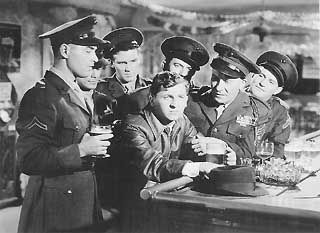
At 2:00 AM comes Bianco's second selection, Hail the Conquering Hero. One of the movies from director Preston Sturges' productive period in the mid-1940s, the movie stars Eddie Bracken as Woodrow Lafayette Pershing Truesmith (you can tell it's a Preston Sturges movie just from the names), a young man who never met his father, the father having died a hero in World War I. It's World War II now, and Woodrow would like nothing more than to servie in the Marines like his father did, so that he too could be a hero. The only problem is that Woodrow couldn't make it in the Marines, as he was drummed out for having terrible hayfever. He couldn't bring himself to tell the folks back home, though, as it would break the heart of his mother and girlfriend (Ella Raines). That is, until he meets a bunch of Marines led by Sgt. Heppelfinger (frequent Sturges cast member William Demarest). Heppelfinger and his men, on hearing Woodrow's predicament, vow to take him home in uniform.

Somebody said honesty is the best policy, and that's a message that should probably have been heeded here. The town, or at least most of it, welcomes Woodrow home as a hero, and one they particularly need. Mayor Noble (Raymond Walburn) and the rest of the town administration has been run by a political machine that has been better for the machine than it has for the town, and only a hero like Woodrow can take on the machine in the upcoming election and defeat it. That, however, requires having an honest-to-goodness hero, which we know Woodrow isn't. Worse, honesty may cause Woodrow to lose his girl, but if she finds out he's been lying to her, that may just make her drop him, too. It doesn't help that Sgt. Heppelfinger and his men are doing everything they can to keep up the ruse.

Hail the Conquering Hero is typical of Preston Sturges' great satires from the 1940s. It takes about as many shots at the establishment as it could for a movie from World War II, and does so without ever letting up on the humor. It helps, of course, that Bracken and Demarest are so good at humor. Personally, I prefer The Miracle of Morgan's Creek, but quite a few critics think Hail the Conquering Hero is better. Either way, they're both worth watching.

Hail the Conquering Hero has been released to DVD, but Amazon only seems to list it as being available as part of a box set.

Thursday, March 11, 2010

Henry Fonda does comedy!

TCM is showing a night of Charles Coburn movies tonight, kicking off with the Preston Sturges comedy The Lady Eve at 8:00 PM ET.

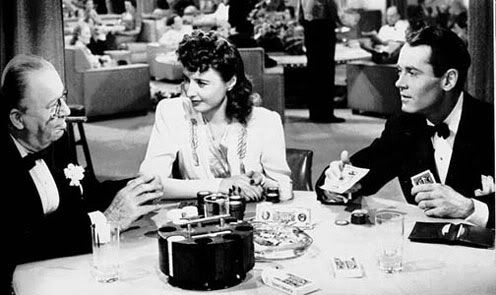
Fonda plays young Charles Pike, the heir to the Pike Ale business. However, he's not so interested in beer-making, instead showing an interest in herpetology. So, when the movie opens, we first see Pike coming back from an expedition to the Amazon. The boats to and from South America are filled with interesting characters, and tis one is no different, as a pair of card sharps shows up: Jean Harrington (Barbara Stanwyck), and her father the "Colonel" (Charles Coburn). They obviously know Pike is on the trip, and figure he's an easy mark for money. However, what Jean doesn't count on is that she's going to fall in love with him.

At first, Pike reciprocates, until he finds out the true identity of Jean, that she's a fraudster and not the high-class lady she's been making herself out to be. At that point, he breaks off contact with her and returns home to his family. However, Jean is still in love with him, and decides to get a measure of revenge by showing up at one of the Pike family parties as the Lady Eve. Although she's determined to pay him back for what he did, Jean/Eve doesn't realize that she's still actually in love with Pike....

This being a comedy, you know it's going to have a happy ending. However, it's the way we get there that makes this movie so much fun. Barbara Stanwyck could do almost anything, and she's as adept at comedy here as she wsa in Ball of Fire. Fonda's comedic style, if you can call it that, seems to be more that of the straight guy, the one who was the funny things happen around him or even to him. He's much less wacky than, say, the Lucille Ball character in Yours, Mine, and Ours. Still, it's not an easy thing to pull off, and Fonda did it a number of times in his career. Charles Coburn is a natural for this sort of role, that of the playfully scheming older gentleman. And the rest of the supporting cast is just as usually good as it always is in a Preston Sturges movie. Eugene Pallette plays Father Pike; Sturges regular William Demarest shows up as young Pike's valet; and veteran butler Eric Blore as one of Colonel Harrington's gang of conmen. They're all helped by a typically glittering script from Sturges.

The Lady Eve, like most of Sturges' work, has made it to DVD.

Wednesday, June 10, 2009

How not to marry a millionaire

Preston Sturges was one of the most biting comedic directors, and it's no surprise that TCM have included him in their salute to directors month, with a night of movies tonight. Among those wild comedies is The Palm Beach Story, airing at midnight ET (that's 11:00 PM on June 10 in the Central Time Zone).

Joel McCrea and Claudette Colbert star as the Jefferses, a married couple who find out that "and they lived happily ever after" is the stuff of fairy tales, and not real life. He's an inventor with an idea for a new type of airport, that he could develop if only he had the funding. That lack of funding is causing all sorts of problems, including not being able to pay the rent, and eventually husband and wife get into a fight over money. She's got an idea: she'll head down to Palm Beach, Florida; get a quickie divorce; and then find a millionaire to marry who will fund his airport project. Sure, it's a daft plan, but this is a movie, not real life. Naturally, though, Mr. Jeffers isn't thrilled with the plan, and tries to stop his wife from carrying it out.

She runs away, though, taking a train down to Florida, where she meets John D. Hackensacker III (Rudy Vallee), an obvious take-off on John D. Rockefeller. Hackensacker is one of America's richest men, but prefers to travel incognito, which is why Mrs. Jeffers is able to meet him on a train. Needless to say, he falls in love with her, and feels pity for her because she makes her husband sound worse than he really is. Re-enter Mr. Jeffers, who has followed his wife down to Florida. She passes him off as her brother, Captain McGlew, since she wants Hackensacker's money and knows that he'd never give it to Mr. Jeffers based on the stories she's told Hackensacker. Meanwhile, Hackensacker has a sister (Mary Astor) who goes through men like Nick and Nora Charles go through martinis, and she immediately falls in love with Mr. Jeffers, not knowing he's actually the husband of the woman claiming to be his sister. How are they going to resolve this conflict? Well, I won't say how, except to say that if anybody but Preston Sturges tried to solve the problem this way, audiences would have left the theater screaming in outrage.

As for The Palm Beach Story, it's a great deal of fun. Joel McCrea does quite well with comedy, even if he is mostly playing the straight man. Colbert is just as good as she was in It Happened One Night, while Vallee and Astor are suitably daffy. Vallee, more known as a radio star than an actor, even gets to serenade Colbert with a song. The minor characters add quite a bit to the story, as is common with a Preston Sturges movie. There's a hard-of-hearing "Weinie King" who appears at the beginning of the movie to give Mrs. Jeffers the money she needs to pay the rent and get to Florida, while Sturges stalwart William Demarest shows up as part of an overly rowdy hunt club with a private train car on the train to Florida.

Thankfully, it's also available on DVD.

Wednesday, December 24, 2008

Remember the Night

A lesser-known, but excellent, Christmas movie, Remember the Night, airs tonight on TCM at 11:15 PM ET, with a repeat on Christmas morning at 6:15 AM. It's not on DVD, and since it was made at Paramount, it doesn't get shown on TCM too often. So don't miss your chance to see it.

Fred MacMurray plays John Sargent, a prosecuting attorney in New York who is currently dealing with the case of a repeat-offender shoplifter, Lee Leander (played by Barbara Stanwyck). It's just before Christmas, and Miss Leander is remanded into custody pending her trial just after the holiday season. Unfortunately for her, she can't make bail, so it seems as though she's destined to spend the holidays in prison. Until the prosecuting attorney takes pity on her. He rustles up the bail money, takes her into his custody, and plans to take her to spend the Christmas holiday with his family in the Midwest.

The two things that happen next are fairly predictable: prosecutor and defendant get into some legal trouble together and, along their journey, fall in love with each other. (I suppose that would happen when you're stuck overnight on a farm and are forced to milk another man's cow.) There's a bit more predictability when the two get to his family out in Indiana. His mother (Beulah Bondi) is a widow, living with her spinster sister and a young man (Sterling Holloway) to help work the farm. They're the stereotype of the kindly small-town folk (as is the entire town), with Ma Sargent especially showing maternal wisdom. She thinks that Lee is actually a sweet thing, and it is this belief that eventually gets Lee to show that she's got a conscience after all. Still, there is that pesky little matter of the trial she's facing after Christmas....

Despite the fact that you know all this is going to happen, it doesn't detract from the movie. MacMurray and Stanwyck worked well together, both in a relatively light comedy like this, and in noirs like Double Indemnity. The two are also helped out immensely by a script from writer (and soon-to-be director) Preston Sturges. Sturges injects the right amount of humor into the proceedings, keeping the movie from becoming overly sentimental. Mitchell Leisen was one of Paramount's better comedy directors in the late 1930s (I've already recommended Easy Living and his 1950s The Mating Season), and handles the material with ease, as though he'd directed a hundred such movies before, yet still keeps the material looking fresh. Finally, there's the aforementioned Beulah Bondi, who really deserves a full-length post of her own sometime. She was a veteran character actress who played mother figures over and over, almost always making them tender and the type of mother you would want to come home to at the holidays (as opposed to Ma Leander, whom we see briefly, and who hates her daughter because she knows what her daughter is).

Remember the Night is an excellent example of the late-1930s romantic comedy, and one which is good for Christmas viewing. Considering the stars, it also deserves to be released to DVD.

Wednesday, February 6, 2008

Chick flicks for guys, part 2

DVD Cover for The Miracle of Morgan's Creek

Our second "chick flick" for guys to rent to watch with their significant other on Valentine's Day is The Miracle of Morgan's Creek. This wild comedy, directed by that master of wilde comedy, Preston Sturges, stars Betty Hutton as a young woman in small-town Middle America during World War II with the name of Trudy Kockenlocker. One night, there's a dance in honor of soldiers departing for the war, so Trudy defies her father's orders and goes to the dance. At the dance, she parties as hard as the young do today -- with the predictable result that she gets drunk. But worse, she gets so drunk that she marries one of the soldiers -- and is completely unable to remember the name of the man she married. Matters go from bad to worse when she finds out that she also got knocked up on her wedding night.

Enter Trudy's partially-serious boyfriend Norval Jones (played by Eddie Bracken). When Trudy finds out she's pregnant, she's got to have somebody appear to be the actual husband, and Norval Jones is just the man! There's even a scene of Jones and Trudy's father (veteran character actor William Demarest) on the front porch, complete with Mr. Kockenlocker cleaning his shotgun! The only thing is, father doesn't know daughter is already married -- and pregnant, and daughter wants her marriage to Jones to be legitimate, so she has to go through the process of getting an annulment, and then getting legitimately married to Jones. Of course, everything that can go wrong does. There's accusations of kidnapping, a jailbreak, pratfalls galore, and an ending that, while improbable, seems to fit in with the movie.

It's a romantic comedy that can appeal to both women and men, and the entire cast puts in excellent performances: Betty Hutton as the wild Trudy; Bracken as her nebbish, put-upon boyfriend; Demarest as the father; and Diana Lynn as Trudy's kid sister, who seems surprisingly knowledgeable about the world for a teenager.