TCM have been marking the birthday of William Holden by showing a bunch of his movies. He would have been 91 today, except that he died back in 1981. It's a pretty sad death, too: Holden, like a lot of actors, was a substantial drinker, and during one bout of drinking, he fell and hit his head on his coffee table. Like Natasha Richardson, he had no idea that he was in any danger, and what should have been a minor injury proved fatal.
I'm not quite sure what I'd consider to be the worst way to die. There are a lot of stars who got cancer, such as Marie Dressler and Humphrey Bogart, and that sort of lingering death has to be horrible. Ronald Reagan and Rita Hayworth are two of the bigger names who had Alzheimer's disease, which is terrible for everybody around the victim, but one has to wonder whether the patient gets to a point where he doesn't realize what's going on around him. In that vein, Lou Gehrig's disease, which killed David Niven, might be even worse.
Having said that, though, Hollywood's writers came up with much more inventive ways for characters to die than the actors who actually played them. The Ex-Mrs. Bradford, for example, is about a killer who uses black widow spiders to murder jockeys. One of the characters in The Girl in Black Stockings walks backwards into a buzzsaw. And to get back to William Holden, in his movie Union Station, airing tomorrow at 10:30 AM ET, one of the characters is trampled to death in a cattle stockyard. Union Station is actually a nifty little thriller, made by Holden and Nancy Olson just after the made Sunset Blvd. together. Olson plays a woman traveling to the big city, who believes that her blind friend was kidnapped, and her bag taken to the city's Union Station; Holden plays the station detective, charged with investigating. Union Station is unfortunately not available on DVD, so you'll have to catch TCM's showing.
Friday, April 17, 2009
What a way to go!
Posted by
Ted S. (Just a Cineast)
at
1:28 PM
0
comments
Thursday, April 16, 2009
Unfortunate names
IMDb's birthday list for today claims that, on this day in 1910, Doris Day was born. Now, if you've seen movies like Alfred Hitchcock's 1950s version of The Man Who Knew Too Much (airing tonight at 10:00 PM ET on TCM), you'll know that Doris Day couldn't possibly have been in her mid-40s when she made the movie. True -- and this obviously means that there's more than one Doris Day out there. In this case, the born-in-1910 Day played bit parts in about a dozen movies in the late 1930s and early 1940s before fading into obscurity. In the case of the more famous Doris Day, she wasn't even born with that name, but with the surname Kappelhoff. It makes one wonder whether the folks at Warner Brothers even remembered the original Doris Day when they signed Kappelhoff to a contract.
There are lots of reasons why actors might have same or similar names. The most obvious of these would be family relations. It's very easy to mix up Alan Hale Sr. (The Adventures of Robin Hood) with his son, Alan Hale Jr. (Gilligan's Island) if you're not paying attention to when the movie being shown was made. The two look amazingly alike, even for a father and son. Siblings can be just as easy to confuse, even though they only share a surname in common.
There are also those names that are by their nature very common. Think of all the Smiths and Joneses out there, for example. Jack Carson is no relation to Johnny Carson of The Tonight Show, although Jack's birth name was in fact John. The James Stewart we remember from the aforementioned The Man Who Knew Too Much and a whole host of other famous movies is often given the screen credit "James M. Stewart", the "M" standing for Maitland. This stems from the fact that there was another James Stewart out there, a "James G. Stewart" who was an Oscar-winning sound recordist. Thanks to these two, you have to feel bad for Stewart Granger, who had to take on such a professional name out of necessity -- he was born James Leblanche Stewart.
Perhaps the most interesting name, however is Vickie Lester, who like the first Doris Day played supporting roles in a dozen or so movies in the late 1930s or early 1940s. However, they all came out after A Star is Born. What was the studio thinking?
Posted by
Ted S. (Just a Cineast)
at
9:52 AM
0
comments
Wednesday, April 15, 2009
Tax Day
April 15 is, of course, the day when we Americans are supposed to file out tax returns. So, I decided to think of a few movies having to do with paying (or not paying) taxes.
I recently recommended Too Many Crooks, in which Terry-Thomas thinks the tax authorities are after him, with good reason: he's been dodging taxes for years.
The Mating Game is a Debbie Reynolds/Tony Randall comedy in which Randall plays a taxman investigating why Reynolds' father hasn't been paying taxes on the family farm.
James Stewart wins a large prize package in The Jackpot, but only afterwards finds out that he actually has to pay tax on all the ridiculous prizes.
The grand-daddy of them all might be The Adventures of Robin Hood. Robin Hood and his merry men aren't stealing from the rich to give to the poor; they're taking back an unjust tax which is allegedly going to go to free King Richard the Lionhearted, but in reality is just going to fund the princes' lavish lifestyle.
The closest I can think of to a pro-tax movie from the studio era might be some of the movies extolling the New Deal, such as Heroes For Sale.
Posted by
Ted S. (Just a Cineast)
at
10:32 AM
0
comments
Tuesday, April 14, 2009
Happy Birthday TCM!
Today marks the 15th anniversary of Turner Classic Movies. The first movie they aired was Gone With the Wind, so it's fitting that this is also the movie which will kick off prime time tonight. Those of us who enjoy classic films are thrilled to have TCM. Sure, there are always going to be people complaining that TCM is either showing too many new movies, or too many well-known movies, or even not honoring people correctly. (However, I don't see them honoring Marilyn Chambers by pre-empting their previously scheduled programming.) Still, TCM can't please everybody all the time, and they have to try to balance off various groups of fans by pleasing each of them at least some of the time. I, for example, don't care for a lot of musicals, so when TCM are showing a wreck like Seven Brides for Seven Brothers this Thursday evening, I'll just find something else to watch. TCM are doing the best they can, and if it weren't for TCM, there would be much less chance to see such films as Little Fugitive or The Runaway, or even a foreign film like The Cranes Are Flying, which I had waited for years to see. So a big happy birthday wish to TCM, and here's to many more years of classic movies!
Posted by
Ted S. (Just a Cineast)
at
2:47 PM
0
comments
Marilyn Chambers dies at 56
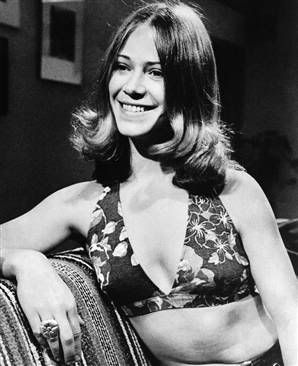
Marilyn Chambers, a name I had vaguely recognized as being a porn star, was found dead in her house, at the relatively young age of 56. In reading the obituary, I was surprised to learn a couple of things. First, before becoming a porn star, she did commercials for Ivory Snow detergent. (I'm also mildly surprised to see that Ivory Snow is still made; I don't think I've seen a commercial for it for years.) More interesting, though, is that the photo seen here is from 1973, which is a year after she made her porn breakthrough. Apparently, back in the day, the female stars of adult movies didn't have to have the big assets that they stereotypically have nowadays.
Posted by
Ted S. (Just a Cineast)
at
2:38 PM
0
comments
Monday, April 13, 2009
Easter Monday
The day after Easter is more of a holiday in Europe than it is here in the US, so on this foreign holiday, why not take a Roman Holiday? (Probably because I can hear the groaning all the way from Rome....)
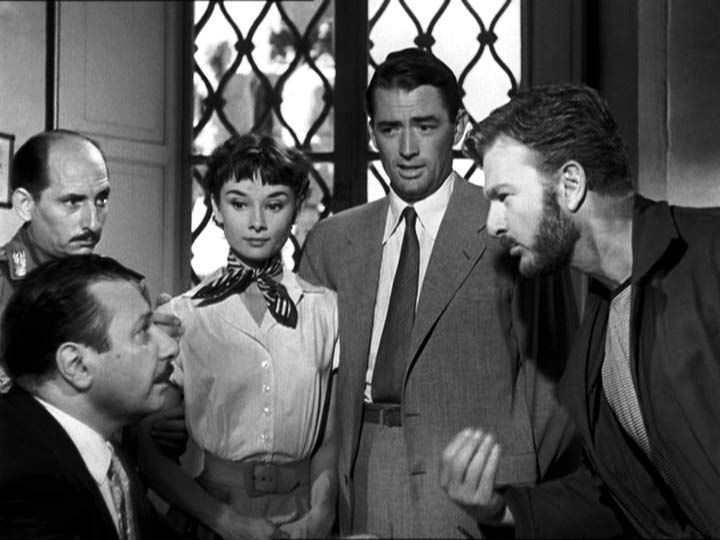
Gregory Peck stars as Joe Bradley, an American journalist in Rome whose job it is to cover the visit of young Princess Anne, who's doing the grand European tour to promote her (unstated) country's interests. Princess Ann (Audrey Hepburn) doesn't exactly enjoy the duties of her office, and as a young woman would like to have some more liberty. So, tired of having to greet a bunch of stuffy old people at a nighttime reception, she decides to run off to see Rome. Unfortunately, her handlers had given her a sedative, so she's in no condition to go out on the town, and ends up in a taxi with Bradley.Bradley takes this woman back to his apartment, but doesn't realize until the next morning that it's Princess Ann. He realizes that he's got the scoop of the year on his hands, if only he can get the pictures to prove it. So, Joe calls up his photographer friend Irving (Eddie Albert), and gets Irving to tag along with the two of them for the day, secretly taking pictures as Joe takes Princess Ann out for a day on the town. Needless to say, while they're gallivanting around, Joe and Ann fall in love, despite the fact that it's a relationship that can't possibly work out.
Roman Holiday is a delightful movie, part romance and part travelogue; almost as good in the travelogue part as the old Traveltalks shorts (although it would have been nice if the Rome of the early 1950s could have been captured in brilliant Technicolor). The three leads all look like they're having the time of their lives making this movie. Also, the dilemma of how to resolve Joe and Ann's relationship is very well handled. Audrey Hepburn won an Oscar for her role, which made her a star. Indeed, she got billing before the title on the insistence of Gregory Peck. He was the male lead, and realized fairly early in the shooting what a remarkable job Hepburn was doing, so he let the producers know that she deserved such a high billing. Roman Holiday is also suitable for the whole family, although boys of a certain age may not care for the romantic part of the plot. (There are good-natured fight scenes to make up for that, however.)
Posted by
Ted S. (Just a Cineast)
at
11:06 AM
0
comments
Labels: audrey hepburn
Sunday, April 12, 2009
Rabbit redux
Today being Easter, I started to think about some rabbits in the movies. The most obvious example would be Bugs Bunny, although he was by no means the first animated rabbit. Walt Disney's animator Ub Iwerks created Oswald the Lucky Rabbit when the two were working at Universal in the late 1920s, and the rights to about two dozen of the Oswald cartoons were famously traded by NBC/Universal to Disney/ABC in order to let ABC's sports announcer Al Michaels move to NBC in order to do Sunday Night Football.
I was going to mention real rabbits, but my first movie selection was going to be Harvey -- who isn't an actual rabbit. Or is he?
The old joke about rabbits is that they reproduce like crazy, and this joke is referenced at the end of the nice Robert Montgomery movie Hide-Out. This movie also has a young Mickey Rooney crying when he finds out that one of his rabbits is the family's dinner.
If you prefer warm, cuddly bunnies to rabbits, try Bunny Lake Is Missing. Oops; that's only got a bunny in the title. And there's nothing warm and cuddly about the movie either.
Happy Easter to all our Christian readers.
Posted by
Ted S. (Just a Cineast)
at
3:17 PM
0
comments
Saturday, April 11, 2009
Administrative test
Posted by
Ted S. (Just a Cineast)
at
9:01 AM
0
comments
Friday, April 10, 2009
Dizzy nuns
Come to the Stable was on the Fox Movie Channel this morning, and to be honest, I had never seen it before. Loretta Young and Celeste Holm star as a pair of nuns who, depending on your point of view, could be considered anything from naïve to pushy. They've just come from France to try to build a children's hospital, and seem to have no idea of the way America works. (Surprising, since the impeccable American accent of Loretta Young's character is explained by her having been born in the States.) They simply expect God in His providence to provide for them because, by golly, they've got faith.
It reminded me of Lilies of the Field, and the piece that TCM runs from time to time on Sidney Poitier. In the movie, Poitier plays a man traveling through Arizona who gets waylaid by a bunch of East German refugee nuns trying to build a chaple in the middle of nowhere. Through their guile and faith, they get Poitier and everybody around them to help out with the construction. This, like Come to the Stable is thoroughly unrealistic (not that the unrealism takes away from either movie), and one of the speakers in TCM's piece on Poitier refers to those "dizzy nuns" getting Poitier to build that chapel.
I wanted to do a longer piece of Nuns on the Run. It's an enjoyable enough (even if not great) movie about two career criminals who find that modern crime is getting too violent for them, and find that the only way to escape this life is by escaping -- into a convent! Insert the standard string of cross-dressing jokes, along with the standard Catholic jokes, as one of the criminals is Anglican and doesn't know any of the finer points of Catholicism. It was released on DVD, but is apparently out of print.
Posted by
Ted S. (Just a Cineast)
at
4:35 PM
0
comments
Thursday, April 9, 2009
Learning new things
I'm not a film historian, or even particularly expert when it comes to classic cinema; I'm just a fan. As a result, there are times when I learn something new about the movies. Last night on TCM was one such time, as I had barely even heard of the name Morris Engel. His 1953 independent movie Little Fugitive kicked off the night, and is well worth at least one viewing.
The plot is fairly simple: an older brother has to look after his kid brother, and doesn't particularly like doing it. Together with his two friends, he springs a joke on his kid brother: play dead, and make his kid brother think he actually shot the older brother. Unfortunately, this didn't have quite the effect that the older brother had in mind. The younger brother thinks he's going to be punished by the police, and so runs away to Coney Island until the heat is off. Naturally, the older brother gets quite worried when he discovers that his younger brother has gone missing....
Little Fugitive is a fascinating film for a whole host of reasons. It's told in a cinéma vérité style. Engel, who was a still photographer by trade, used a 35-millimeter camera that he could strap around his body, making it possible to have a cameraman who was much more unobtrusive, enabling a much different feel than one would get from normal Hollywood movies. Also, the actors used were not professionals, and had a much more naturalistic approach to moviemaking. Even though these are fictional characters, they're much more believable as a real family than Judge Hardy and his brood. Engel's photographic techniques are combined with a use of the real Coney Island, as it existed in the early 1950s, and is a far cry from the obviously stagebound Coney Island of a movie like The Devil and Miss Jones. It's both interesting and a bit bittersweet, in that a lot of the places presented in such movies don't exist any more.
Although Little Fugitive is a worthy movie, it does have a few flaws, mostly in that the pacing seems a bit off. There are a few sequences, especially those involving the little kid's picking up bottles to get the deposit money, that go on longer than they really should. Also, there are one or two plot points that seem unrealistic. But give the movie a chance. It does seem to be available on DVD, but currently only in a box set with Engel's other movies, meaning you'll have to pay a bit higher price.
Posted by
Ted S. (Just a Cineast)
at
2:34 PM
0
comments