Showing posts with label Australia. Show all posts

Saturday, August 9, 2025

Dead Calm

Several months back, TCM ran a night of "before they were stars" movies. With them about to expire from my DVR, I made a point of watching them before they expired and writing up the posts to schedule at some point in the future. First up is a very young Nicole Kidman in Dead Calm.

Kidman is a native Australian, and this movie was made in Australia even though I think the other two leads are not in fact Australian. Sam Neill is John Ingram, an officer in the Australian navy who as the movie opens is returning home for Christmas leave with a bunch of other sailors. At the train station, he's stopped by a couple of policemen who have some terrible news for him: his young child was killed in a car accident, and his wife Rae (that's Kidman) is in hospital badly shaken. We get a brief synopsis of the accident to see why Rae is in the state she's in.

To deal with their personal grief, John and Rae decide to take their personal yacht out to sea for a long voyage in the tropical Pacific (the movie was filmed near islands that are part of the Great Barrier Reef), together with their dog who is good about fetching things out of the ocean, which is a bit of foreshadowing. After a month or so at sea, the pair come across a boat that looks like it's adrift with nobody on it, at least not at first. There does turn out to be one man, who is barely able to make his way to the Ingrams' boat.

That man, Hughie Warriner (Billy Zane), has just his trunks and one backpack-sized bag, from which he fishes five passports, which he says are the passports of the other five people on the boat. Hughie then informs the Ingrams that the other passengers died of what he thinks is food poisoning (although why he didn't get poisoned himself is an obvious question), and that the boat is taking on water. He's sick enough that he's about to pass out, so the Ingrams put him in one of the below-decks cabins and lock the door.

John finds the log among Hughie's stuff, and reading it, he's got some questions, so he takes the dinghy over to the other boat to investigate. While there he's able to generate just enough power to run a monitor that has a videotape running that looks like it was taken on the boat and has two escort-type young women asked to be involved in some sort of morally questionable activity, with Hughie getting involved in it in a way that the man who chartered the boat clearly doesn't like. Obviously more reason for John to suspect that there's a lot more going on with Hughie than he's letting on.

And then Hughie wakes up and, finding out he's locked in the room, wants to get out. This is sensible enough, but rather than calling out for Rae when he gets the skylight opened, he breakes the hinges and escapes from the room to physically subdue Rae and start a sort of mutinty, steering the ship away from the one that he was originally on and that John is still (and which by now is fairly clearly takin on water, leaving it with an only partially functional radio). There's not much need for more of a synopsis, as the questions raised by Hughie's actions are fairly obvious. How they resolve themselves, however, is not necessarily what you might expect.

Dead Calm is a very well-made movie, with one small exception and one slightly larger exception. The small exception is that the story doesn't quite give a good explanation of how Hughie came to be so psychotic. The second deals with the ending. Apparently multiple endings were filmed and the one wet get is based on preview audience reactions. I would have preferred something else, although I also have to say that this comment in itself might be giving something away.

Dead Calm is another of those movies that came out when I was an adolescent and still too young to drive myself to the movie theater. That, and I don't know whether it would have shown up in my local not-big-city sixtyplex. So I hadn't heard of it until the TCM showing. However, I'm extremely glad that I have had this chance to watch Dead Calm. I highly recommend it to any movie buff.

Tuesday, June 20, 2023

Sweetie

Another of the movies that I watched because it was about to expire from the Watch TCM app and because it had an interesting synopsis was Sweetie.

Sweetie was the debut feature film effort by Jane Campion and from the opening credits I got the vibe that it was going to be a bit of a personal story. Kay is a young Australian woman who comes from a working-class background and is in the sort of job that doesn't seem like it would allow one to get very far ahead in life. She meets Louis, who is the boyfriend of somebody else who works in the same building, at least until Louis and Kay start having a relationship. That relationship is a bit volatile, however, because the sex is no good and they have a serious dispute over planting a tree where it's going to have to come down in a decade or two when the roots threaten the foundation.

To be honest, however, it feels as though Kay and Louis could figure out a way to work out their problems and have a modestly happy life together. At least, until Kay's sister Dawn, who has the nickname Sweetie, comes in. I mean, she literally comes in in the sense that Kay returns home one evening to find that Dawn has shown up unannounced, together with her apparent drug-abusing boyfriend Bob. Kay has obviously seen all of this before. Sweetie has some sort of mental illness of the sort that can be more or less kept under control with the right drugs, except that Sweetie doesn't want to take the drugs. Showing up like this with a no-good boyfriend, whom she refers to as her "producer" since she has delusions of being able to make it in some facet of the entertainment world, is the sort of thing a mentally ill person would do.

Not only Kay has seen it, but Kay and Sweetie's parents have seen it as well. Neither of them knows how to handle Sweetie, and whatever they've done for Sweetie, it obviously hasn't been the right thing or else Sweetie wouldn't be horning in on Kay's home with her POS boyfriend. If Kay doesn't know how to deal with it, it's worse for the parents, who have reached the point of a trial separation, with Mom moving out to points further west. Eventually, everybody loads up the family car in search of Mom to try to have some sort of reconciliation with Mom and to see if they can get Sweetie better.

Part of the problem I had with Sweetie is that to me it comes across as another of those movies where none of the characters, with the possible exception of Louis, is particularly sympathetic. The other thing is Jane Campion's direction made me feel like I was watching somebody like David Lynch. A lot of the shots felt highly stylized, with the focus being put on some particular object foregrounded for no good reason until the focus moved to the actual action in the scene. Some people may enjoy this sort of camerawork, but for me it felt like it didn't work here.

Having said that, it is also easy to see that here's a director who had some potential and might be able to go on to bigger things. In Campion's case, she got to direct The Piano, and as a result some are going to want to look at this earlier work. But there are probably dozens of would-be directors out there who made debut movies that don't quite work and then never got the chance to go on to more commercial and successful things.

Wednesday, July 21, 2021

Quigley Down Under

Tom Selleck was quite popular on Magnum, PI back in the 1980s, but for whatever reason he nevr got that many good movie parts. One of the best would be in Quigley Down Under.

Selleck plays Matthew Quigley, who at the start of the movie is getting off a boat in Fremantle, Australia (the port city for Perth on Australia's west coast) in the late 19th century. As he's getting off the boat, there's another American dubbed Crazy Cora (Laura San Giacomo) who is being harassed, so Quigley defends her. The thanks he gets is that Cora keeps calling him "Roy". Also thankless is the fact that the people who were harassing Cora are working for the man who's hiring Quigley, a ranch owner named Elliott Marston (Alan Rickman), they not realizing this is the man they're supposed to pick up.

Quigley is down in Australia because he needed to get away from whatever about the American West made him uncomfortable, and because he's got a skill Marston can use. Marston had taken out newspaper ads for a marksman, and boy is Quigley a good one. He, like Lucas McCain, has a modified rifle that, in Quigley's case, allows him to shoot highly accurately at distances over a half mile, which is pretty amazing for the late 1800s. You can imagine the sort of vermin in the Australian outback that might be a threat to a sheep rancher.

However, Quigley finds out over dinner with Marston that those aren't the vermin Marston has in mind. Instead, the Australian government has a policy of "pacification" regarding the Aborigines, with ranchers allowed to pacify them by any appropriate measures. For Marston, this means exterminating them. However, they've learned to stay out of range of traditional pistols and rifles, which is why he wants a sharpshooter who can shoot at extreme range.

If Quigly was displeased with what he saw in America, you can only imagine how he's going to react to this. First he throws Marston out of his own house through the front door, and when Marston comes back in, throws him out a second time. Quigley is badly outnumbered however, as nobody else seems to have a problem with exterminating the Aborigines. So they concuss him, drag him out to the middle of nowhere, and leave him and Cora to die.

However, the men assigned that job made one mistake. Quigley had been promised £50 in gold coins, a substantial sum in those days, and the men who left Quigley for dead didn't think to take that money. So Quigley appeals to their greed, and is able to stab one of the two while getting his hands on his rifle to shoot the other one.

What follows next is a mix of a whole bunch of movies, like the Robert Ryan Inferno, or Walkabout or The African Queen, albeit on dry land, as Quigley and Cora try to escape and survive while falling in love along the way. It's a predictable formula, but one that works well, which is probably it's been used so many times in the movies. Selleck, despite his facial hair being styled to ridiculous levels, fits the role easily, while San Giacomo is good as a woman with a past. Rickman wasn't too far removed from Die Hard, and is unsurprisingly good as a nasty villain.

But what really surprised me about Quigley Down Under is how dark it was. For some reason, probably because of Tom Selleck in the lead role, I thought it would be a fairly light, if not outright comic, western. Sure there's some comic relief, mostly having to do with Quigley constantly being called "Roy", but for the most part the movie isn't light at all, being particularly unflinching in its depiction of the treatment of Aborigines.

Quigley Down Under is currently in the rotation on one of the commercial cable channels, but it's also on DVD the last I checked.

Monday, April 5, 2021

Strictly Ballroom

Another of the movies that I had the chance to record during one of the free preview weekends is Strictly Ballroom. It's going to be on again multiple times this week, starting with 10:00 PM today on The Movie Channel (three hours later if you only have the west coast feed), so I sat down to watch it and do a post on it here.

The movie starts out in mockumentary fashion, with Shirley Hastings (Pat Thomson) talking about her son Scott. Shirley was big in the field of competitive ballroom dancing back in the day, and she stayed in the field after her competition days were over, having a son Scott (Paul Mercurio) and training him to dance, along with running a school of ballroom dancing. Scott apparently caused controversy at a district-level competition, by diverting from the traditional steps and doing his own thing, which caused a scandal in the cloistered world of competitive dance, and caused a breakup with dance partner Liz (Gina Carides).

The big competition, eventually leading to the Pan-Pacific Championship, is coming up fairly soon, and Scott needs a dance partner. Offering her services is Fran (Tara Morice). She's part of Australia's Spanish community, who emigrated to the country in the years immediately after World War II, at least as I understand it. So she's still got a father and grandmother with one foot in both Australia and the old country. But we're getting ahead of ourselves a bit, as the bigger problem is that she's one of the beginners at the dance school, and with her big glasses doesn't look the part of a ballroom dancer at all, which probably wouldn't work so well in competition.

Still, Scott decides to dance with her, mostly because he's reached the level of being passionate about doing the dancing he wants to do, which isn't necessarily the dance that everybody else would want him to do. So there's a lot of pressure on Scott from his mother, as well as from Kendall, the nominal owner of the dance school. On Fran's side, there's a lot of bigotry from the more established dancers, as well as pressure from her own family who aren't so sure of these non-Spanish dances with somebody not of the Spanish-Australian community.

Eventually, however, Scott comes to be accepted by Fran's family, and learns about his own parents' history with the Pan-Pacific, just in time for the big competition. Apparently, a lot of the judging is based on reputation, and it's tough to do well if the judges have already decided who they think is good based on past reputation. And will Fran even dance in the competition? Will Scott put in his own steps?

There's a lot good in Strictly Ballroom, which takes one of the basic universal storylines, that of tradition versus modernity, and updates it deftly by putting it into a relatively new setting of competitive ballroom dancing. (I distinctly recall my local PBS station running some shows of such competitions in the late 1980s or early 1990s, around the time Strictly Ballroom came out.) However, I had a lot of problems with the movie, or more specifically the direction by Baz Luhrmann.

There's a lot of artificially gaudy color, which reminded me of some of the camerawork in David Lynch's Blue Velvet. To an extent, that fits in with the movie in that the way the competitors make themselves up for the competitions (in part, I believe, to capture the attention of the judges who are not always up close to the dancers on the other end of the dance floor) does look highly stylized. But I felt Luhrmann overdid it, to the point that it became intrusive and took away from the story.

The other big problem I had was that Strictly Ballroom gave off a strong vibe of what led to Variety's "Stix Nix Hick Pix" headline, only in an Australian context (of course I, being American, may have a completely wrong view of Australia here). It felt a lot like Luhrmann playing the part of a sophisticated metropolitan, saying "Look at these icky lower-class people from the sticks trying to get ideas above their station with their ballroom dancing! Aren't they so déclassé?" It gets tedious as fast as Douglas Sirk's movies do. Reading the Wikipedia article on Luhrmann, it seems he grew up with a ballroom dance teaching mother in the rural part of New South Wales, so I can't help but wonder if it's personal with him.

Still, there's definitely a lot of Strictly Ballroom that's interesting and definitely worth a watch.

Thursday, September 3, 2020

Sister Kenny


If you're not sick of the cult-like hero worship surrounding the so-called heroes on the so-called frontlines of coronavirus, you're in luck. TCM has decided to get in on the action with a spotlight on doctors in the movies. Every Thursday in September the prime time lineup will feature doctors. This first Thursday has medical researchers with multiple biopics. (Not all of tongiht's movies are biopics, however, as Arrowsmith is on at 2:15 AM.) One I haven't blogged about before is Sister Kenny, which will be on at 10:00 PM.

Rosalind Russell stars as Elizabeth Kenny, who returns home from nursing school to a small village in Queensland, Australia circa 1910. She's got a boyfriend who would like to marry her, and the feeling is mutual, in the form of Kevin Connors (Dean Jagger). However, on pretty much her first day home, she's called to attend to little Dorrie McIntyre (Doreen McCann). She's suffering from fever and some sort of horrendous muscle cramping that's left her paralyzed.

Now, if you were an audience in 1946 when the movie was released, you can probably guess the diagnosis. But Elizabeth didn't know and was only a nurse, not a doctor, so she telegraphs the doctors in the city hospital, Dr. McDonnell (Alexander Knox) and Dr. Brack (Philip Merivale) the symptoms and awaits the response. They unsurprisingly tell her that the child most likely has "infantile paralysis", which is a euphemism for polio, for which a vaccine wouldn't come until several years after the movie was released (and a few years after the real-life Kenny's death). Their advice is to treat the symptoms as best she can.

For Elizabeth, this means applying heat and then, figuring that one of the muscles in a muscle pair can't relax, use physical therapy to force the muscle to relax and then "re-educate" the muscles. Amazingly, this works, since little Dorrie is eventually able to get up and walk. And the local outbreak has several other cases of children who, with the same therapy, are also able to walk, something that medical science considered extremely abnormal to say the least.

So Elizabeth and the sympathetic Dr. McDonnell take Dorrie to see Dr. Brack to show him the results of her therapy. Dr. Brack, being an expert on poliomyelitis with a library full of books by other learned experts, is sceptical. He suggests that perhaps these children had something other than polio; to be fair, he didn't actually get to examine them personally when they were actually lying in bed paralyzed with fever. But there's also a strong helping of doctors looking to protect their own turf.

World War I comes and Kevin, not yet having married Elizabeth because she's been too busy applying the "Kenny method" to sick children, goes off to Europe to fight. Elizabeth takes time away from treating the children to help the soldiers in France, which is how she gets the title "Sister", that being used in Australia for a military nurse. But when World War I ends, she's still not going to marry Kevin, sacrificing a family for all those children who shouldn't have to grow up wearing leg braces.

As much as Sister Kenny continues promoting the "Kenny method" of treating children with polio, Dr. Brack and the rest of the medical establishment stand in firm opposition. A meeting with all of them doesn't work, with maybe one doctor other than McDonnell showing sympathy. So when America comes calling, off she goes to use the Kenny treatment on America's sick kids.

Sister Kenny is a well-made Hollywood biopic, although you have to be aware that it's a) a biopic and b) a Hollywood studio production, both of which mean there's a lot of baggage in terms of storytelling. I didn't know much about Elizabeth Kenny going in, and I'm not certain how much more I know having watched the movie. The movie clearly takes Kenny's side, seemingly never suggesting that the Kenny method might have had less than a 100% success rate. To be fair to Kenny, however, it seems as though she did have an important role in the field of physiotherapy. I can also see why the film might have resonated with audiences upon its 1946 release.

Regardless of how much embellishment the movie has, Rosalind Russell still does a very good job with her role, picking up an Oscar nomination in the process. The male actors are all in supporting roles and do them well. This being an RKO movie, the production values aren't quite up to what they'd be over at MGM, but they also don't detract from the movie. If you want a good example of a Hollywood biopic for all the strengths and flaws in the genre, Sister Kenny is a good movie to watch.

Sunday, January 12, 2020

My Brilliant Career


Another of my recent movie viewings was the Australian movie My Brilliant Career.

Judy Davis plays Sybylla Melvyn, a young woman living on a struggling ranch with her parents and younger siblings in Australia just before the turn of the 20th century. Sybylla is a dreamer, writing the great Australian novel in her journal and playing the piano when she's got chores to do around the house. Indeed, the family needs her to be doing those chores because of the monetary problems her parents are having. Not only that, but Sybylla is getting to the age where she really should be working a real job of her own to pay her own way, such as a maid's job which was the sort of thing for young women of her position at the time.

Unsurprisingly, Sybylla rebels at this notion, and a lifeline is thrown her way in the form of her grandmother (Aileen Britton) and aunt Helen (Wendy Hughes) living with Grandma, as well as another sibling, Uncle Julius (Peter Whitford). This seems like a respite, although it's really a way for Grandma and Helen to teach Sybylla how to be a women who can fit into her place in society. Sybylla continues to rebel, when it's suggested she marry nice Englishman Hawdon (Robert Grubb) and move to England with him.

Then a neighboring property owner, Harry (Sam Neill), comes for a visit to conduct some business. He first Sybylla in one of her rebellious phases sitting in a tree writing poetry, and neither of them knows who the other is. Eventually they meet each other more formally, and the light goes on over their heads, as it were. Each of them has strong emotional feelings for the other, but there are any number of problems.

Harry invites Sybylla to spend some time at his estate together with his aunt, and we beging to learn more about the two characters' problems that might prevent a relationship with each other. Sybylla is such a rebel that she's not certain she wants to marry anybody. And both of them have their own financial problems. Harry may lose his estate, while Sybylla's dad has gotten into really bad debt, and the only way he and Mom can think of to pay it off is to have Sybylla be a governess to some low-rent farmers.

Through all of this, Sybylla keeps writing, and the end of the movie suggests that it's all an autobiographical but fictionalized story of the author, Miles Franklin's, own life. Will our characters be able to find true happiness?

My Brilliant Career is a very well-made movie, with lovely cinematography of the Australian hinterlands, production design, and performances from the various actors. But I couldn't help but have some problems with the movies, largely because Sybylla comes across as a very unappealing character at times. Not that Davis does a bad job; it's more that the character as written is tough to sympathize with. Apparently Davis herself shared some of that assessment.

Still, My Brilliant Career is a movie that's definitely worth seeking out and watching. It only seems to be on DVD (at least here in the US) in a pricey release from the Criterion Collection, which is a bit of a shame.

Sunday, August 19, 2018

The Man from Snowy River

Another recent movie watch was the 1982 Kirk Douglas movie The Man from Snowy River.

Tom Burlinson plays Jim Craig, a young man living in the isolated mountains of the Australian state of Victoria in the 1880s back when the place was even more isolated than it is today. He lives with his father Henry, making a subsistence existence farming the land and logging. About the only one else up in the mountains is old Spur (Kirk Douglas), a miner prospecting for gold. Unfortunately there's a band of wild horses, and those have been known to spook the Craigs' horse. One day while they're out hauling logs, the horse is spooked again, to the point that he breaks his chains and runs off. That's bad, but worse is that this sends one of the logs crashing down the mountain, killing Dad.

Jim goes down to the lowland to find a job, and eventually he's ble to get a job as a farmhand to Mr. Harrison (Kirk Douglas; he's got a dual role). Harrison is a widower with a daughter of about 18, Jessica (Sigrid Thornton). Jessica is old enough to go off to college and Dad wants to send her away, but Jessica is a budding women's lib type, or at least what passes for women's emancipation in the 1880s, and is a willful child who wants to make her own decisions in life.

Now, with a young man and a young woman that age, you can probably guess what happens next, which is that they begin to fall in love. For fairly understandable reasons, Dad doesn't want Jessica to be in a relationship with Jim. After all, he's looking to live as a hill farmer, which isn't much of an existence considering the fact that the Harrisons have a lot of land and offer a lot of opportunity. Plus, there's a lot of unfinished business between Mr. Harrison and Spur who, as it turns out, is Harrison's brother.

Things get worse when Jim takes it upon himself to try to break a horse for Jessica, and the horse escapes off with the wild horses. Jim has to redeem himself by catching the horse; and perhaps he can get his old horse back too.

The Man from Snowy River is a well-made movie. There's not much new going on here, as it's a coming of age story with a lot of plot points you'd see in other movies. There's Jim's becoming a man; the love angle with a disapproving father; the search for gold in an out-of-the-way location; and the feuding brothers. The one difference, and it's not that much, is that it's set in Australia. But it all comes together for easy-to-watch entertainment. If there's one problem I had, it's that since this was made in the 1980s, technical advances led to some camera shots that look pretentious and artificial. But that doesn't take away from the story.

The Man from Snowy River is available on a modestly-priced DVD, and I can heartily recommend the movie for anybody.

Sunday, May 20, 2018

Evil Angels

Another recent viewing off my DVR was A Cry in the Dark, which was released in Australia (where it was made) as Evil Angels. This is one of those odd movies that seems to be available on DVD (and in print) at Amazon, and also available on streaming video

A Cry in the Dark tells the story of the family of Azaria Chamberlain. Azaria's father Michael (Sam Neill) was a Seventh-Day Adventist minister in Queensland, Australia, living with his wife Lindy (Meryl Streep borrowing the wig Robert Wagner wore in Prince Valiant), their two sons, and infant daughter Azaria in 1980. The family goes for a vacation to Ayers Rock, and we see in a bit of foreshadowing as the film shows us a dingo looking down on everybody that the Outback can be a dangerous place.


At night, Lindy and Mike are talking with some of the other campers assembled at the popular tourist spot, when Lindy decides to go back into the tent, only to discover that the baby is missing. Lindy then sees a dingo darting off into the night, so she reaches the obvious conclusion: "The dingo took my baby!", a line that has been parodied ever since. A large search is conducted, and eventually all that's found is a bloody onesie; a jacket Azaria had on over it isn't found, which will be important later in the story.

The family eventually goes home to suffer the death of their baby alone, except that the incident has become a national case. The Chamberlains are weirdo Seventh-Day Adventists, after all, and their faith in God means that they don't show the sort of repulsive emotion that the media engendered after Princess Diana died because she was too stupid to wear a seat belt. So the media decide to start a campaign against her, but for a while the law is on the Chamberlains' side. The coroners' inquest backs up the Chamberlains' story that the baby was most likely taken by a dingo, and the judge presiding has a blistering attack on the media's handling of the case.

Somewhere along the way, however, the Chamberlains must have made some powerful enemies, because the authorities decide to reopen the case based on circumstantial forensic evidence, allowing the media to resume their Two Minutes' Hate against the Chamberlains as Lindy is put on trial for murdering Azaria. The amount of prosecutorial grandstanding during the trial is also shocking. All of this also puts a huge strain on Michael and Lindy's marriage. (They divorced in 1991, a few years after the film was released.)

A Cry in the Dark is an excellent study in the media circus that forms around prominent events and how mob mentality can doom people. It's helped in part by being based on a real case, and in part on using more of a docudrama style of filming than what had been done back in the Hollywood studio days. Films like Spencer Tracy's Fury are well-made looks at the same sort of mob mentality that surrounded the Chamberlain case, but they, and even a relevant Fox docudrama from the 1940s like Boomerang! seem to be too Hollywood-bound. A Cry in the Dark has an ugly underside that's needed to make the movie work.

It's also a big plus that the two leads, Streep and Neill, both give excellent performances in difficult roles. Streep has a difficult task, both in seeming emotionless and then having to stand up for herself when both her husband and her attorneys are trying to get her to act in a stereotypical way. Neill's character has to break down on the stand, not in a crying way, but in a way that he's not mentally able to handle questioning that's designed to be deliberately confusing and catch him in a trap. This too is a difficult portrayal that Neill pulls off well.

A Cry in the Dark is strongly recommended.

Sunday, December 17, 2017

Walkabout

Last night's viewing to get something off my DVR was Walkabout.

Jenny Agutter plays The Girl, a teenager living in Australia (although she's revealed to be English later in the movie) with her parents and kid brother (Lucien John, full name Luicen John Roeg and son of director Nicholas Roeg), who apparently have a middle class urban life that involves living in an apartment and doing the same thing every day.

One day, her father (John Mellon) takes the two kids out into the outback for a picnic; why Mom isn't on the trip isn't mentioned. Dad doesn't seem to want to be there, looking at some business papers which imply he's in the mining industry. The kid brother gets out to play, and all of a sudden Dad picks up a gun and starts shooting at the kid! When the girl saves herself and the kid brother behind a pile of rocks, Dad burns the car and shoots himself!

Now, the logical thing to do would be for the kids to walk back out the way they came in. If they weren't on a paved road, they should be able to find tracks, and probably should have some idea of exactly how they got there. And they couldn't have driven that long to get where they are. But no, the idiots go in the opposite direction, which means danger and near certain death.

But they have a bit of luck in that while they're at a watering hole, an Aboriginal yough (David Gulpilil) shows up. He's on a rite of passage known as a "walkabout", when young Aboriginal men have to spend a bunch of time alone in the outback to prove that they can live off the land. But, the Aboriginal boy doesn't speak a word of English. (The exposition about the family being English expats probably has something to do with the girl's idiocy in just speaking more slowly to get the Aboriginal boy to understand English.) Thankfully, the kid brother has enough sense to make a charades drinking motion. The three youths ultimately go off together; of course, the two whites have no idea where they'll be going.

Walkabout is a well-made movie, albeit one that I have some problems with. I already mentioned the huge plot issue for me, but there was another issue in that I didn't care for the constant cutting, interspersing the current action with images of the westernized life the two white kids had back at home. There was even one section that had a couple of frames of some printed material in between the outback shots, which made no sense whatsoever. The story, however, is for the most part good if full of unanswered questions, the outback cinematography is beautiful, and John Barry has an interesting music score.

Walkabout is available on DVD and Blu-ray, but it's courtesy of the Criterion Collection, so it's a bit pricey.

Friday, April 29, 2016

Australia day on TCM

TCM is spending this morning and afternoon with a day of movies set in Australia. The last couple, at least, were definitely made in Australia. I probably should have written a post on Picnic at Hanging Rock (airing at 4:00 PM) last night, but there was other stuff on my plate. For those who haven't seen the movie, it's set at the turn of the last century, and involves a group of adolescent schoolgirls at an Australian boarding school who go for a day trip to a park where there's a mountain. Despite being warned not to, a couple of the girls go up the mountain -- and some of them don't return. It's an interesting story, and one that's very gorgeously filmed, having been made in Australia by Australians. Jackie Weaver, who has a bit part in it, presented it on TCM back in May 2014 I think when she was the Guest Programmer and presented movies from the Australian new wave. The movie is available for purchase, but since it's from the Criterion Collection it comes at a pretty steep price

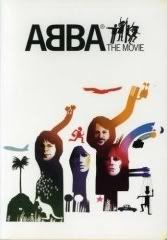
That will be followed at 6:00 PM by ABBA: The Movie. This is a look at the Swedish supergroup's March 1977 concert tour of Australia. There's a framing story about a rural DJ who has the task of trying to get an interview with the group, and always winding up one step behind them, the poor hapless guy. Along the way, he gets man on the street interviews with "regular" Australians. More interesting, of course, are the scenes with ABBA themselves. The concert scenes are good, while the backstage stuff (obviously a lot of it staged since they're talking in English) are even more entertaining. I think this hasn't aired on TCM since New Years Eve between 2004 and 2005, when they showed a night of concert movies and I actually stayed up until 1:30 AM to watch the end of it. This one is also on DVD and a bit pricey, but not as much as Picnic at Hanging Rock.

Monday, April 18, 2016

The Year of Living Dangerously

I was going to do a post on The Year of Living Dangerously on Saturday, since TCM was running it on Sunday. However, my home internet went down and trying to do a regular full-length post on my smartphone is not really an option. Thankfully, The Year of Living Dangerously is available on DVD, so I'm comfortable doing a full-length post on the movie even though it's not coming up on TV any time soon.

Mel Gibson stars as Guy Hamilton. He's a young Australian journalist, who has just gotten his first foreign correspondent assignment in Jakarta, Indonesia, circa 1965. It's a turbulent time both for Australia, which was going through some tough times in its relations with Southeast Asian countries, but even more so for Indonesia. Indonesia had, since independence from the Dutch in the late 1940s, been led by Sukarno, a dictator who was becoming increasingly unpopular by this time. Sukarno's forces are brutally repressing anybody who opposes him. More worrying to the west, however, was the fact that Sukarno seemed to be supporting the Communists and was definitely taking a stance against the West in trying to creat a "third way" with Yugoslavia and newly independent African countries.

Guy Hamilton goes into all of this more or less like Johnny Jones/Huntley Haverstock in Alfred Hitchcock's Foreign Correspondent: don't regurgitate the press releases that the various government officials are handing out, but find out what's really going on underneath the surface. That of course is going to be difficult for somebody who doesn't know anybody in Jakarta and doesn't even know what to look for. It's not as if the other foreign correspondents are really that much of a help. They've become cynical enough that they're basically sending out the same old stuff the government releases. You'll learn, too, they seem to imply to Guy.

But Guy meets a couple of people who might be able to help him. One is Jill Bryant (Sigourney Weaver), who works at a western embassy. The other is Billy Kwan (Linda Hunt playing a man), an Australian photographer who has gone native, living in a small house away from the western compounds and hotels and even supporting a local woman. Billy has also started to believe that Sukarno is no longer good for the Indonesian people, to the point that he's willing to risk his freedom to protest. But before that he's able to give Guy some pointers as to what's really going on. Meanwhile, Guy learns some information that's probably classified, and if he were to release it he'd get in trouble. More pressingly, there's a military coup started.

The Year of Living Dangerously is an interesting movie about a period of history that isn't discussed much in America, largely because America was more concerned with the growing involvement in Vietnam and the domestic civil rights struggle at home. Mel Gibson shows that he really could act. Sigourney Weaver is good enough but I didn't find her particularly memorable. It's Linda Hunt who is the standout, however. Then again, she's getting an extremely juicy role of a woman playing a dwarfish man caught between two worlds.

All in all, The Year of Living Dangerously is a movie I'd highly recommend.

Wednesday, December 25, 2013

Bush Christmas

Over the weekend, TCM showed a movie that's nominally a Christmas film, but really only is set around Christmas: Bush Christmas.

As the movie's opening narration tells us, the movie is set in an out-of-the-way portion of the Australian outback around Christmastime, just after the school has let out for the Christmas holiday, which, being in Australia, is in the middle of summer. Three siblings and their two companions are heading home to the ranch their farmer works, getting on their horses to go home since this being the middle of nowhere in the 1940s, school buses would have been unheard of. There's Helen, the oldest of the bunch; her younger brothers John and "Snow", named for the color of his hair; Michael, a boy who was evacuated here from the UK because of the war; and Neza, the Aboriginal son of the ranch owner's best ranch hand. Although they're supposed to head straight home, one of them gets the idea to take a little detour, and it's on this detour that they meet Long Bill (Chips Rafferty). They don't realize it, but he's a horse thief, which is a big deal in these parts considering the way everybody relies on horses. He gives them some money to keep quiet about having met him, and this gets them in big trouble.

They face even bigger trouble when they wake up th enext morning and discover that that Lucy is missing. Lucy is dad's prized mare, and the kids know just who did it. And they also know that they let on about Lucy, so they feel terribly guilty about what they've done. They try to rectify the situation by telling Dad and the police about the guy they met, but the police don't quite believe their theory about where the horse thieves might have gone. Well, if none of the adults are going to believe them, then the kids are just going to have to find the bad guys by themselves. They say that they're going to go camping for a couple of days -- something the presumably would have been considered completley normal in 1940s Australia, but would make any parent in today's era of helicopter parenting blanch. Kids doing this stuff independently?

The kids are actually legitimately fairly independent and resourceful, although they would have been better served with a few more days' worth of rations, being reduced to hunting snakes to eat, which of course turns one of the kids' stomachs. Not Neza, though; he's vital to the mission as he knows the ways of the outback and can track and hunt with any adult. As for those horse thieves, they get the distinct impression that somebody might be chasing them, especially after they find Helen's hat. And if they didn't think the kids were just lost, they really know something's up when they wake up to discover the kids have ambushed their camp and freed the horses and taken their boots! Still, the penalty for horse thievery must be so severe that the thieves march on, eventually making their way to a ghost mining camp for a climactic scene.

Bush Christmas is a good movie for both children and adults. In many ways, you could think of it as a children's movie because the kids are the most important part of the cast, and because the themes are so simple. But these children seem realistic. They have some smarts but aren't so brilliant that they can't be outwitted at a key point by the horse thieves, who themselves are suitably good villians. More importantly, the kids aren't irritating like a lot of Hollywood child actors can be. Sure, you know there's eventually going to be a happy ending, even if the opening narration didn't imply it. But Bush Christmas is a winner in any case, and a good movie for any time of the year, not just Christmas.

Bush Christmas has received a DVD release, although I wonder from the Amazon entry whether it's out of print as they claim to have only a couple of copies left. The TCM Shop says they have it in stock, although I wonder whether they've confused the 1947 Bush Christmas with a 1983 remake which introduced a young Nicole Kidman to the world.

Tuesday, November 19, 2013

Animal Kingdom

A few months back, DirecTV was running a free weekend of Sundance and some other channels, and one of hte movies I got the chance to see for the first time was Animal Kingdom, a 2010 film from Australia not to be confused with the 1932 Leslie Howard film The Animal Kingdon. It's running again in the wee hours of tomorrow morning, at 4:40 AM on Starz (if you get both the east coast and west coast feeds, you'll have a chance to see it at 7:40 AM ET as well).

The movie starts off with a scene that's both prosaic and disturbing. Teenager Joshua Cody (James Frecheville), nicknamed J, is sitting on a couch in some suburb of Melbourne, Australia, watching some mindless game show on TV. Next to him is his mother -- who's just died of a drug overdose. Dad's nowhere to be found, so J calls his grandmother Janine (Jacki Weaver), nicknamed "Smurf", and asks her for advice. That advice includes moving in with her. After all, it's not as if he's got any place else to go.

J moves in to an extended family. In addition to Grandma, there are three of her sons, or J's uncles, who always seem to be around: younger brothers Darren and Craig, and older brother Andrew (Ben Mendelsohn), nicknamed "Pope". Also around a lot is their friend Barry Brown (Joel Edgerton), nicknamed "Baz"; he, however, has a wife of his own. The four of them are a criminal gang of a sort that's never quite fully explained. Grandma, depending on your point of view, is either a Mildred Pierce type: she's simply spoiled her kids to the point that they've gotten in a very bad way; or, she might be like Raymond Shaw's mother in The Manchurian Candidate, actually being the lynchpin on the plot.

It's always a dangerous time to be part of a criminal gang, but the atmosphere of the movie makes it even more dangerous. For reasons that are again not quite fully explained, the police have begun to take the law into their own hands. Instead of just arresting the putative bad guys, they actually ambush one in a grocery store car park and shoot him in cold blood! This causes the brothers to want to gain revenge, in a plot which involves stealing a car, abandoning it in a suburb, and then shooting the police who come to investigate. The plot also involves J, who is expected to hotwire the car for his uncles.

And so J has been sucked into the criminal gang, although he's still a minor. The police are investigating, and J's being a minor gives the chief investigator, Det. Leckie (Guy Pearce) some leverage. Further complicating things is that J has found a girlfriend in the form of Nicky (Laura Wheelwright). J faces a very tough situation. Obviously, he doesn't want to go to prison, and to that effect it might just be best to lawyer up and not answer any of the police questioning. And he might want to live something resembling a normal life, or at least as normal as you can approach after his chaotic upbringing. But he's also got a family full of criminals who eventually show that they're willing to use discipline to keep people in line.

Animal Kingdom is a gripping story with a lot of twists and turns. What I've outlined above is mostly the first half of the film; I want to avoid giving too much in the way of spoilers. The acting is generally quite good. Frecheville as the lead generally portrays an atmosphere of somebody who thinks he's in invincible teenager, but at heart really wants to be detached from everybody else. Mendelsohn as the more depraved uncle, and Weaver as the grandmother are especially chilling at times. Guy Pearce was probably the biggest name in the cast at the time the movie was made, but his role is more of a supporting role, which he performs well enough. Ultimately, though, Animal Kingdom rests on the strength of its story depicting one mightily screwed-up family.

Animal Kingdom did get a DVD release which you can find on Amazon (including an "Instant video" version), but I'm not certain if the hard-copy DVD is still in print, since I couldn't find it at the TCM Shop.