Showing posts with label Eleanor Parker. Show all posts

Saturday, February 7, 2026

Between Two Worlds

Many years ago, I did a post on the early sound film Outward Bound which I found interesting for the way in which I felt it actually tried to use sound as a character in the movie. Outward Bound was remade as a somewhat bigger movie during World War II and given the title Between Two Worlds. I'd been meaning to get around to watching it, so the last time TCM ran it I finally recorded it and eventually watched it, wrote up this post, and saved it in drafts for you to get this post today.

The movie starts off at a travel agency in some British seaside port, presumably Southampton although I don't know that the movie makes this explicit. Various people are trying to get passage to America, something which is difficult considering the war going on. Among them Henry Bergner (Paul Henried), a former concert pianist who joined the anti-Nazi resistance in his home country but had to flee to England. He's not allowed to board, and heads home to commit suicide. As he's going through the streets, we see the car that's carrying the other passengers about to set sail get bombed in a Nazi air raid.

Cut to a shot of Henry'a apartment, where we find him having turned on the gas to off himself. His distraught wife Ann (Eleanor Parker) enters the apartment, and decides that if Henry is going to kill himself, she's going to join him because she'll have nothing to live for. Henry, for his part, tries to keep Ann from joining him, but she's insistent.

And wouldn't you know it, the next thing they know is that they're on the boat that Henry had been trying to get a ticket for, which doesn't seem to make sense at first unless of course you've seen Outward Bound before. And in any case, it's explained much earlier in Between Two Worlds than in Outward Bound what's happened. Henry and Ann are dead, as are all of the other passengers on board, although they're being carried to a sort of purgatory where they'll be judged by the "Examiner" before it's to be determined where and how they spend eternity.

The next passenger to figure out what's happened in Thomas Prior (John Garfield). He's the sort of cynical reporter who always seems to have a sharp word for everybody else but has set up such a shield around himself that he claims not to feel anything. And he's more than willing to spill the beans on what's happening even though the ship's purser, Scrubby (Edmund Gwenn), wants everybody to figure it out for themselves that they're already dead.

Among the other passengers are Pete (George Tobias), a sailor reminscent of the William Bendix character in Lifeboat; a wealthy older couple; a local vicar who winds up helping the "Examiner"; gold-digger actress Maxine Russell (Faye Emerson); housemaid Mrs. Midget (Sara Allgood); and war profiteer Lingley (George Coulouris). Eventually the Examiner (Sydney Greenstreet) shows up to deliver judgment on each of the passengers.

I think I personally preferred Outward Bound in part because I have a thing for early talkies and in part because it's a much more compact little picture at almost 30 minutes shorter than Between Two Worlds. However, even I have to admit that Between Two Worlds has much better production values. Ultimately, however, I think a lot of which version are going to prefer is going to come down to their preconceived notions of the stars playing the various characters. The role played by John Garfield is much changed for Garfield's screen persona, the role having been essayed in Outward Bound by Leslie Howard. A little bit of Garfield can go a long way, and here I think he's a bit too cynical. Somewhat like his character in Four Daughters in that regard.

Sydney Greenstreet, on the other hand is excellent in his role, as is Allgood. So it's not without reason that many fans are going to prefer Between Two Worlds. Watch both and judge for yourself.

Wednesday, October 1, 2025

Julie Andrews at 90

Today marks the 90th birthday of actress Julie Andrews. As such, it's not a surprise that TCM is spending the evening with a night of her films. Not too many: just four, since all of the movies are over two hours. The night kicks off with a movie that premiered on TCM only a few months ago: The Sound of Music, at 8:00 PM.

Now, this isn't going to be the biggest of synopses, since I presume most people know the basic story of The Sound of Music. Maria (Julie Andrews) is supposed to be a student and possible novitiate at a convent in Salzburg, Austria, but she's a flighty young woman who would rather go up in the mountains and sing. Indeed, I don't think we have a line of regular dialogue until about 15 minutes into the movie as we get the title song followed the nuns singing about how to solve a problem like Maria. They decide to solve that problem by sending her off to be the governess of the von Trapp children. They're a wealthy family of seven children whose mother died some time back but who have a way of scaring off would-be governesses.

Part of that is the children's pranks, but just as much of it is because of the father, Captain Georg von Trapp (Christopher Plummer, for whose Summer Under the Stars day the movie got its TCM premiere). He's humorless, runs the family like clockwork, and doesn't expect the kids to do such normal kid stuff like play or, God forbid, sing. Meanwhile, he's on-again, off-again seeing a baroness (Eleanor Parker), and there's an expectation that Georg is going to marry her since she seems like she'd be a good stepmother to the children. They do genuinely seem to like her, as well has her producer friend who comes from Vienna, Max Detweiler (Richard Haydn).

Of course, the viewer knows that Maria winds up a von Trapp. Her presence fairly quickly brightens the children's lives as she's willing to take them out for a day on the town to play, as well as hike up mountains and sing. This is also going to piss off Dad. But Max likes their singing, and Maria is just so damn nice that Georg starts to warm to her. However, there are going to be many complications along the way.

One of them is the class difference and the expectation that George should marry a woman of the Baroness' social standing. But the Baroness eventually realizes Georg and Maria are meant to be together. The bigger problem is the political situation. The Nazis had been putting all sorts of political pressure on Austria, with the eventual result being the Anschluss, when Germany annexed Austria in March 1938. George was not pleased with the Nazis, and this was obviously going to be difficult for him. In the movie, he receives a telegram from Berlin informing him that he's being voluntold to go to Bremerhaven to join the German navy and take up his old job as a ship's captain. This is what convinces him that he and the rest of the family have to escape.

I am not, as I have stated here quite a few times over the course of the years, the biggest fan of musicals. To me they're incredibly artificial. The Sound of Music is no different. It also goes on incredibly long, lasting a shade under three hours. But I can't deny that the movie is extremely well made from a technical point of view, with a fine performance from Andrews and a lot of lovely cinematography. Not that it's difficult to make the Austrian Alps look good on screen. So for anybody who likes musicals, they're going to love The Sound of Music. Granted, such people have probably already seen it. But if anybody who likes musicals has not yet seen The Sound of Music, do yourself a favor and watch it tonight.

Tuesday, September 2, 2025

Marjorie Lawrence

Another of the movies that I had seen show up on TCM quite a bit, but for some reason never got around to watching, is yet another musical biopic: Interrupted Melody. So one of the more recent times it showed up on TCM, I made a point to put it on my DVR. It's got another airing, tomorrow, Sept. 3 at 6:00 AM, so I watched it to be able to put up a post for tomorrow's showing.

Eleanor Parker plays Marjorie Lawrence, and as the movie opens it's the mid-1920s on a farm in a rural part of Australia where Marjorie lives with the rest of her family including dad (Cecil Kellaway in a small role) and brother Cyril (Roger Moore in an early role). Marjorie is desperate to catch the train for Geelong, because there's a music competition being held there that she's been hoping to enter despite the fact that Dad doesn't quite approve. However, she wins the competition, and the prize of a music scholarship in Paris, so Dad figures that if God gave her this talent, she might as well use it.

On what we presume is her first day in Paris, she accidentally bumps into an American medical student, Thomas King (Glenn Ford). She then gets taken on as a student by a celebrated music teacher by singing outside the teacher's window, which makes no sense since she had supposedly won a scholarship in Paris. One would think such a prize involves having some one (or a school) engaged for the teaching already. But Marjorie works with the teacher, Cécile Gilly, and is eventually able to get a job with an opera company. Stardom follows although Dad dies, and Cyril serves as Marjorie's on again, off again manager.

Marjorie and Thomas keep running into each other even though it's implied that someone of more noble birth is more appropriate for Marjorie to be involved with. Not that she cares, as she eventually pursues Thomas to the point that she claims she's willing to give up her career to marry him. Thomas loves her and her singing, and he has no plans of letting her abandon the opera just to be his wife and the mother of his kids. Granted, balancing his obstetric practice with her career which has her traveling isn't necessarily going to be easy. But they do get married.

And then tragedy strikes. Marjorie is doing rehearsals for Tristan and Isolde, and she has trouble hitting some of the high notes. Worse, she takes a nasty fall which lands her in the hospital. The diagnosis is polio, which is a likely career ender. Except that with a movie like this, you have to expect that Marjorie might be able to overcome such a tragedy even if you didn't know that it's based on a true story.

Marjorie spends a while being pissed at the world since she's trapped in a wheelchair and doesn't have the vocal range she once did. It gets to the point that she considers suicide. But just as she's about to do that Thomas shows up to stop her and work with her to the point that one of Thomas' doctor friends suggests singing for the injured soldiers fighting World War II. (The real-life Lawrence contracted polio in 1941.) She's even able to return to opera in stagings that are modified to fit a singer who can't walk around the stage.

Interrupted Melody is a well-enough made movie, although I think even more than a lot of the other musician biopics I've done reviews on, it's the sort of material that's going to feel really dated. It's also opera, which is a genre that has a narrower appeal than the song standards that a lot of those other biopics had. And, in a move that surprised me on reading about the movie, MGM didn't have Marjorie Lawrence herself do the dubbing for Eleanor Parker.

So I have to say that I'm glad I've finally seen Interrupted Melody, but at the same time must admit that it's not my favorite and not the first thing I'd think of recommending to people for a movie of any of the stars involved or any of the themes in it.

Monday, July 21, 2025

The Very Thought of You

Another movie that I was surprised to find that I hadn't heard of before its most recent airing on TCM back in 2024 was the Warner Bros. World War II homefront film The Very Thought of You. It being from Warner Bros. and part of the old Turner Library that makes up the backbone of the TCM schedule, you'd think I'd have seen it before. But I hadn't, so I recorded it the last time it showed up. It's getting another airing on TCM, tomorrow (July 22) at 11:45 AM, so now is the time for the obligatory review.

The Very Thought of You was released in 1944, and starts off with a part of World War II that audiences of the day would have known well but not so much today: the Japanese occupation of a few of the Aleutian Islands. Any number of US soldiers were stationed there as a result (in real life Charlton Heston was stationed there), but as the attempted occupation failed the US could send many of the soldiers back stateside. Among them is a platoon with Sgt. David Stewart (Dennis Morgan) and his pal Sgt. "Fixit" Bilman (Dane Clark). They have a week's leave or so and their next deployment is going to have them ship out from San Diego, so they head down the west coast, winding up in Pasadena where David studied structural engineering at Caltech and he visits an old professor who doesn't realize David has been away for three years.

On the bus from Caltech to wherever the two soldiers are going to be staying, they run into two young women who are doing their part for the war effort by working at a parachute factore. Fixit tries to chat one of the women up, not so successfully, but it turns out that the other woman recognizes Sgt. Stewart. That woman is Janet Wheeler (Eleanor Parker), who worked before the war as a soda jerk and served Stewart pretty much every night since he was working his way through Caltech and stopped there after work for a shake. She developed a flame for him, although he doesn't quite remember her. The two men offer to walk the two women home. And then Janet offers David dinner with the family since it's Thanksgiving as well as her parents' anniversary.

You'd think the family would be happy to do their part for the war effort; if you remember the old Fox film Sunday Dinner for a Soldier this sort of thing was a pretty big deal. But the Wheelers are a dysfunctional family. Dad (Henry Travers) seems to have been a bit of a failure as a man, although the way the family can afford a nice middle-class house would suggest not. Mom (Beulah Bondi) can have a nasty temper and is unhappy that Janet brought a stranger home, even though you'd think it would be easy to explain his presence. There's an older brother who isn't serving because he supposedly flunked a physical, and older sister Molly (Andrea King) who married a sailor hastily before he went off to war and, thinking she'll never see him again, has decided to see a series of other men in the meantime.

As you can guess, Janet and David fall in love, but half of the Wheeler family is not only unhappy with this, they're willing to try to sabotage the relationship! It's really surprising for a movie from this era that family members would be doing such things. Janet has a quickie marriage to David before he goes back off to fight again, and even gets knocked up on one of their two brief honeymoons, yet still Mom and Molly try to make Janet's life hell to the point that Janet moves out and keeps the pregnancy a secret from Mom and sister. And then Molly's husband shows up, which really starts to change things....

The Very Thought of You is a dated movie, having been released in the autumn of 1944. It's the sort of homefront stuff that ultimately has a happy ending that audiences of the day clearly would have identified with. Audiences 80 years on probably won't, which doesn't make the movie bad so much as a bit more difficult for some people to get into. The stars do a good enough job, and I suppose I should also mention Faye Emerson as Cora, Janet's co-worker from the beginning of the film, who also winds up in a subplot relationship with the Dane Clark character. Henry Travers, unsurprisingly, is as good as ever here.

Although The Very Thought of You is a decided time capsule, it's one interesting enough to merit a viewing.

Tuesday, January 28, 2025

Needs more sin

British author Somerset Maugham has had his work adapted for movies a surprising number of times, with several of the works getting multiple adaptations over the decades. One such story is Maugham's 1925 novel The Painted Veil which I haven't read, but which was adapted under that title as a Greta Garbo vehicle in the 1930s, and again about 20 years ago (I haven't seen the 2006 version). In between, in the 1950s, the story got another film version, but this time with the title The Seventh Sin.

In the Greta Garbo movie, and apparently in the novella, the story begins with the early adulthood of the main female character, who marries a doctor who is going to do charity work in China at a chaotic period in Chinese history. In The Seventh Sin, however, the action opens in Hong Kong, 1949, which is a big issue for multiple reasons. One is that we miss all of the main characters' back stories, especially the main female character Carolyn (Eleanor Parker). Plus, by this time in 1949, the Communists would likely have been causing westerns to leave China, especially missionaries; see the movie Satan Never Sleeps.

In any case, Carolyn is married to Walter (Bill Travers), a doctor whom she had met when he was in the US trying to requisition medical equipment some time back. They got married and moved out to Hong Kong, but it's a boring life for Carolyn, who has taken on a suave lover in the form of Paul (Jean-Pierre Aumont), who himself is married with a wife and kids although we never see those. Indeed, we barely see Paul. Walter returns from work one day to the signs that Carolyn has been carrying on a relationship with some man not her husband, and confronts her about it. On learning his wife has betrayed him, Walter gives Carolyn a choice: face a messy divorce or convince Paul to get a divorce from his wife, knowing full well that Paul doesn't want the public humiliation and that Paul's wife wouldn't grant the divorce anyway.

The other choice involves not only staying with Walter, but accompanying him into mainland China: there's yet another cholera epidemic in one of those Hollywood Chinatowns, and the western doctors and Catholic convents are doing the good work of treating those poor benighted Chinese. Carolyn can follow Walter to the hinterlands, basically in exile.

When they reach their new home, they find they have a neighbor in Tim (George Sanders), who seems to know all the local gossip but has no other real purpose in the story. Carolyn grows tired of the loneliness, and decides she wants to go to the convent and find out what she can do to the locals to help as a layperson. Complications ensue in that she finds out she's pregnant, while Walter contracts cholera.

There are multiple problems with The Seventh Sin. One is how we never see the back story that would drive Carolyn to start an affair in the first place. Walter here is mildly neglectful to the extent that he's consumed with his work, but other than that he's presented as bland, not even enough of a sufferer to be a saint. Aumont is also underused, while the mainland part of the story goes on too long.

Ultimately, The Seventh Sin feels like a movie where someone took part of a story and padded it to feature length, when what really should have been done is to take a whole story and adapt it to that feature length. I'd definitely rather recommend the Greta Garbo movie instead.

Sunday, September 10, 2023

The Voice of the Turtle

TCM must have had an Eleanor Parker day, which would explain why I recorded a couple of her movies in close proximity. In addition of Many Rivers to Cross which I recently blogged about, my DVR also had One for the Book, which was based on a play titled The Voice of the Turtle and originally released to theaters under that title. (The print TCM showed in fact had a title card reading The Voice of the Turtle, but in the listings and in my YoutubeTV library it was listed as One for the Book.)

Parker plays Sally, a struggling actress in New York City in the later stages of World War II. (The play premiered in 1943 and was a big hit; the movie premiered just as the stage play was ending its run in 1947 and "updates" the action to late 1944.) Sally has been in a relationship with Kenneth (Kent Smith). But he's unwilling to make the sort of committment that Sally wants, so he basically breaks off the relationship and exits the movie.

Sally commiserates with her best friend and fellow actress Olive (Eve Arden, clearly here to provide the comic relief once again). She's got a thing for military men, this being the height of World War II, and is currently seeing naval Commander Ned Burling (Wayne Morris). But Ned isn't the first military guy she's been with during the war. Another of them, Sgt. Bill Page (Ronald Reagan), has gotten leave, and he's in town looking up Olive.

Olive doesn't want to be mean to Bill, so she decides to set him up on a dinner with Sally since both of them are looking for someone to go out on the town with. The two of them spend a pleasant enough evening together, but then Bill finds there's a mix-up with his hotel reservation and he no longer seems to have a place to stay for the night, something that was again a common theme during World War II. And as you can guess, the two start developing feelings for each other.

This causes problems for any number of reasons. Of course, society isn't necessarily going to look so highly on the idea of an unmarried woman having a man in her apartment overnight. And then there's Olive, who finds that perhaps she still has feelings for Bill. She's apparently not a one-woman man, and when the traditional rom-com trope of the two leads possibly breaking up before getting back together in the final reel comes, Olive is there waiting to pounce.

One for the Book is a pleasant enough romantic comedy, although it's also one that's pretty tightly bound to the era the play was created. When the movie was released in 1947, there was still enough respect for soldiers to make something like this work, but trends like the move to the suburbs and then less virtuous wars like Korea would change America enough to make something like this a museum piece. Sgt. Page is the sort of light and affable role that's perfect for Ronald Reagan, while Parker charms as well. Eve Arden is typically great as the comic relief. So although the movie is dated, it's still worth a watch to see an America that's never going to exist again.

Sunday, September 3, 2023

Many Rivers to Cross

I have to admit that I'm not the biggest fan of Robert Taylor. But since he was under contract to MGM for 20-plus years, they put him in everything. For those who like the sort of movie that MGM made, they'll probably enjoy Taylor's comic turn in Many Rivers to Cross.

The setting is Kentucky around the time that it became a state in the late 1790s. Kentucky was still a relatively wild place, and it was the women on the frontier just as much as the men who helped make it a place where the white man could live. Among the men are Bushrod Genty (Robert Taylor), a trapper when a man could still make a living trapping in Kentucky. He's a concerned bachelor, which kind of ticks off some of the frontier women who would love to have him as a husband.

One such woman isn't about to let go when she meets Bushrod. That's Mary Cherne (Eleanor Parker), who is a tough woman of her own. She knows how to shoot a gun, mostly out of necessity since there are still Shawnee raiding those parts of Kentucky not near a fortified city. She saves Bushrod one day when he's attacked by the Shawnee, and brings him back to her place, which is really the family farm run by her father Cadmus (Victor McLaglan). Bushrod injured his arm in the attack, so he has to stay for a while to heal up, which gives Mary ample time to fall in love with him, much to the chagrin of Luke Radford (Alan Hale, Jr.), who has been pursuing Mary.

The rest of the movie deals with Mary's attempts to tame Bushrod and get her to marry her, which he actually does, although he also assaults the justice of the peace which gives him a short stint in jail. This gives him another chance to escape married life, but you know that in a movie like this, circumstances are going to intervene to give Mary and Bushrod another chance to meet up and fall back in love, this time against the backdrop of another Shawnee attack....

Many Rivers to Cross is the sort of movie that's imbued with all the gloss and charm MGM could give a picture. Even into the mid-1950s they still had high production values, which mostly show here. Once again, however, for some people, and I'd certainly include myself in this group, it's the sort of production values that aren't necessarily quite right for a movie set on the frontier.

Taylor and Parker both show themselves to be reasonably adept at the sort of light drama interspersed with comedy that the movie calls for, and it's easy to see why it would appeal to a certain segment of the movie-going public, both in the 1950s and even today amongst those who like classic movies. So once you know what you're getting into, if Robert Taylor is your sort of thing, then definitely give Many Rivers to Cross a try.

Thursday, December 9, 2021

Soldiers in White

I recently watched my DVD of They Died With Their Boots On. The DVD has several extras including a couple of shorts. I already blogged about A Tale of Two Kitties; recently I watched the other short, Soldiers in White.

In a big-city hospital in the days just before the US entered World War II (the movie has a 1941 copyright but IMDb lists a 1942 release and the final scenes really imply extra footage was filmed after Dec. 7, 1941), Charles Anthony (John Litel) is a hospital chief of staff who is announcing to the new interns and nurses that he's going to be leaving the hospital to take on an important new task of joining the Army to train medics. One of the nurses is young Miss Ryan (Eleanor Parker in her movie debut), who decides that she too wants to join the Army. This is much to the chagrin of intern Johnny Allison (William T. Orr), who fancies himself a ladies' man and has been pursuing all of the nurses.

Wouldn't you know it, however, but Johnny gets drafted. Not that he takes the military seriously, as he sees it as an opportunity to keep pursuing Nurse Ryan. That is, until he gets in an accident that fractures his leg and leaves him laid up. That gives now Maj. Anthony the opportunity to have the sort of talk Judge Hardy would have had with Andy, and get Johnny to change his tune on a dime and learn to love Big Brother military life.

The movie concludes with a bunch of medics marching, with the stentorian tones of Warner Bros.' house announcer Knox Manning making Reed Hadley over at Fox look like a piker in terms of pushing the propaganda and stridency up to 11.

Soldiers in White is mildly interesting for Eleanor Parker, and the print on the DVD has extremely nice Technicolor photography for a short, since you'd think those would have gotten short shrift in the presentation department. But the plot is terrible, and there's a reason didn't become a star. (Orr did, however, go on to become executive producer of quite a few TV shows in the first two decades of network TV.) It's good to have this on a DVD as an extra, but it's not something I'd go out of my way to look for between movies on TCM if they were still listing their shorts in the online schedule.

Thursday, August 12, 2021

Never Say Goodbye

Errol Flynn did have the ability to do comedy, even if he didn't get much of a chance to show this ability at Warner Bros. Even when he was put into a comedy, he got a less than stellar script, as in Never Say Goodbye.

Errol plays Philip Gayley, who is looking to buy a coat for his daughter Philippa, nicknamed Flip (Patti Brady). Having just shown up earlier at the same department store to buy Flip a coat is Flip's mother Ellen (Eleanor Parker). It turns out that Philip and Ellen are divorced, but have joint custody of Flip. The daughter is expected to live for six months with Dad, followed by six months with Mom, and today is the day when Flip is supposed to go back to Mom along with Flip's nanny Cozy (Hattie McDaniel, who's much underused here).

Philip still holds a bit of a flame for Ellen, and wouldn't be opposed to getting back together with her, but he's a magazine artist whose job has him doing drawings of glamorous young women such as Nancy (Peggy Knudsen), so sometimes the temptation has gotten too great and he spent enough time with those women to make Ellen jealous. This, combined with a mother-in-law (Lucile Watson) who seems to have it in for Philip, and you can understand why Ellen has gotten a divorce.

Meanwhile, Flip definitely wants Mom and Dad to get back together, and encourages them to go to dinner at a restaurant run by Philip's friend Luigi (S.Z. Sakall), but that goes bad when it transpires that Philip had also invited Nancy there to dinner on the same evening and has to try to keep the two women apart, which you know he isn't going to be able to do. There's also the chance to make Flip happy by having Phil surreptitiously play Santa instead of Ellen's new love interest, but that one goes bad as well.

There's still one more chance, however. The movie having been released in 1946, it's right after the end of World War II. Flip did her part for the war effort by becoming a pen pal to a Marine in a program that apparently matched servicemen without anybody to write to them and people who wanted to help. However, Flip sent that marine, Fenwick Lonkowski (Forrest Tucker), a picture of Ellen which naturally leads him to believe he's been getting letters from a lovely adult woman and not an eight-year-old kid, although you'd think he could tell from the handwriting. Unsurprisingly, Fenwick shows up and all sorts of complications arise.

I said at the beginning that Flynn didn't get the best script here, and it's a shame because there's a lot of potential here that goes unrealized. Flynn's character is basically a good guy and Ellen probably knew in her heart that she had made a mistake. But the whole restaurant bit, with Flynn having to lie constantly, goes on way too long. The Marines subplot with Fenwick is also unrealistic, as I can't imagine him being fooled into thinking he got letters from an adult.

It's a testament to the quality of the actors, however, that all of them give their best and do pretty much as well as the script allows them to do. One just wishes the script were better.

Sunday, March 1, 2020

See You in Hell, Darling


There are some movies that aren't very good, but that received an Oscar nomination in the Best Original Song category, so TCM could run them in 31 Days of Oscar. A good example of this is An American Dream.

Stuart Whitman plays Stephen Rojack, a war hero who came home and got a TV talk show in Los Angeles, which is a crazy sort of show that has him ranting to a couple of guests who don't seem allowed to get a word in edgewise, while taking phone calls from the home audience. But he never actually puts the viewers' voices on air, just throwing out rapid-fire rejoinders based on what the viewers are supposedly saying.

One of those viewers is Deborah (Eleanor Parker), who just happens to be Stephen's estranged wife. She's waching from her bedroom in a penthouse apartment in a building her father Barney Kelly (Lloyd Nolan) built for her, while carrying on an affair with a guy who's in bed with her. She calls in not to talk about tonight's topic, which is police corruption and how they're letting the mobster Ganucci get away with mayhem; instead, she calls to taunt Stephen, she just having returned from Europe.

Stephen has decided that he's going to file for divorce since this is clearly a loveless marriage, and goes to Deborah's penthouse after the show. She absolutely does not want to grant a divorce, and tells Stephen this most histrionically, continuing to taunt him, throw things at him, and even break a liquor bottle and threaten him with that.

The struggle continues from Deborah's bedroom out to the balcony after Stephen stupidly tries to wash his face in the fountain out there rather then just getting the hell out of the apartment. She throws more stuff at him, and in the struggle, Deborah ends up on the railing. Eventually she goes over, falling to her death 30 stories below, in an incident that looks as though it might have been an accident Stephen could have prevented, or possibly getting pushed by Stephen -- make your own judgment.

Up to this point, An American Dream has been spectularly, hilarity-inducingly awful. Unfortunately once Deborah falls off the balcony the movie switches to being just tediously bad. Stephen gets down to street level where Deborah's body has been run over by a car... containing Ganucci (Joe De Santis), who for whatever reason returned to California despite having a subpoena to testify before the grand jury hanging over his head. Also in the car is Ganucci's nephew Nicky (Les Crane), and Nicky's girlfriend Cherry (Janet Leigh), who just happened to be Stephen's old girlfriend before he knocked her up and left her for Deborah and her fabulously wealthy father.

The police investigate and think that Stephen murdered Deborah, while he bizarrely claims suicide, and bizarrely doesn't clam up and request a lawyer the moment he's brought in for questioning. Stephen tries to ask Deborah for help, but her mob boyfriend and his friends are pissed with Stephen first for railing against Ganucci and then being the reason why Ganucci got brought in for questioning as well.

This material was based on a novel by Norman Mailer that I haven't read. In theory there's some interesting stuff here, but somehow it went way off the rails, which is a surprise considering the cast. Now, if it had been Skidoo or Valley of the Dolls-level bad, it would be fun. But as I said, it doesn't keep up that level once Eleanor Parker's character dies, and that's a shame. The movie understandably bombed at the box office, thanks in part to scathing criticism. Warner Bros. responded by renaming the movie See You in Hell, Darling, but that didn't help.

You can now watch An American Dream on DVD courtesy of the Warner Archive.

Saturday, August 18, 2018

A brief mention of Clark Gable day

Today in TCM's Summer Under the Stars brings 24 hours of the movies of Clark Gable. I see a movie in the schedule that I don't think has been on in quite some time, The King and Four Queens, at 4:00 PM.

Gable plays Dan Kehoe, a con-man out in the old west who hears about a ranch run by a bunch of women. Ma McDade (Jo Van Fleet, interestingly playing well above her age as she'd do a few short years later in Wild River) runs the place with her four daughters-in-law (Eleanor Parker among them). Apparently the brothers went off and robbed a bank and made off with a huge sum of money. Three of the four brothers were killed, and nobody knows what happened to the fourth.

So Dan shows up saying while he was in prison, he heard from the fourth brother. In fact, it's just a ruse to get on the ranch (for understandable reasons, these women don't like outsiders), so that he can poke around for a while to try to find out where the loot is hidden. But love and other emotions complicate matters....

I think the last time I saw this was in January 2015, which I think was also the last time it showed up on the TCM schedule. I didn't do a post on it then because when I looked to see if it was on DVD, I couldn't find it. It turned out that it already had gotten a release. Anyhow, I enjoyed the movie then, and it's certainly worth a watch.

Sunday, May 7, 2017

Lizzie

I DVRed Lizzie when TCM ran it at the end of March. It's going to be on TCM again tonight at 8:00 PM, so I made it a point to watch the movie last night so I could do a full-length post on the movie today.

Elizabeth Richmond (Eleanor Parker) is a young woman who works at a museum by day and goes home to live with her aunt Morgan (Joan Blondell) at night. Elizabeth is a mousy little thing, having only one friend, in the form of coworker Ruth (Marion Ross). And home life isn't so good either, as Morgan spends most of her time drinking bourbon, the only thing that's worth drinking apparently. Add to all that that Elizabeth is constantly fatigued and receives death threats from somebody calling herself "Lizzie", and you've got a young woman with serious problems.

Ah, but that's just the beginning. One night, as Elizabeth is going up the stairs to her bedroom, she calls aunt Morgan a drunken slut, and claims to have no memory of having done so. We then see her putting on garish makeup and going out to a dive bar that has as the only thing going for it the presence of Johnny Mathis at the piano. This is Lizzie, and Lizzie is a polar opposite from Elizabeth. At the bar, Lizzie meets one of the co-workers from the museum, who obviously recognizes that there's something going on.

As for aunt Morgan, she doesn't recognize it until one morning when the bottle of bourbon is empty. Elizabeth claims to hate bourbon, and Morgan knows she didn't drink it all. So she talks with her neighbor Walter (Hugo Haas, who also directed) about it, and Walter suggests Elizabeth seek professional health. And Walter knows just the man for the job, psychologists Dr. Wright (Richard Boone).

Elizabeth does go to see Wright, who puts her under hypnosis revealing that Elizabeth has another personality in Lizzie. Actually, she's also got a third personality in Beth, who is probably the original personality that was suppressed under the extremely shy Elizabeth and the extremely vicious Lizzie because Beth had to survive some chidhood trauma. But what is that trauma, and how could it mess Beth up that much?

Lizzie is very reminiscent of The Three Faces of Eve, and both came out in the same year. Lizzie isn't remembered as much, probably because it didn't have studio backing -- it was produced by Kirk Douglas' independent production company. It's really not a bad movie, but it's one that's hampered by its subject material. It's so easy to wind up over the top when you've got as your story a person who plays three wildly different people, and then add pyschiatric counseling to all that. Lizzie, unfortunately, falls into that trap at times, with the result that you'll probably find yourself laughing at points that aren't supposed to be funny. Some would point out, however, that this makes it even more of a reason to watch Lizzie.

Lizzie has received a DVD release courtesy of the Warner Archive collection (the movie was distributed by MGM; I don't know the rights status of other films produced by Kirk Douglas' company). It probably ought to be on one of those four-movie box sets than a standalone.

Wednesday, January 20, 2016

A Millionaire For Christy

TCM's Star of the Month Fred MacMurray was adept at comedy. Somebody who is not particularly remembered for doing comedy, however, is Eleanor Parker. The two were teamed in A Millionaire for Christy, which is airing early tomorrow morning at 4:45 AM.

MacMurray plays Peter Lockwood, a radio host out on Los Angeles who is about to get married to June (Kay Buckley). This to the chagrin of his best man Roland (Richard Carlson), who had a thing for June. What none of these people knows is that things are about to change for them, in a big way. Apparently, Peter had a distant relativedie and leave him a $2 million inheritance, which would be quite nice today, but a whole lot nicer back in the early 1950s. The law firm sends one of their secretaries, Christy Sloane (Eleanor Parker), to inform Peter of his inheritance.

Except that Christy gets some other ideas. Well, she's given those ideas by fellow secretary Patsy (Una Merkel). If you're going to meet a man who is about to become a millionaire, Patsy tells Christy, why not try to get him to fall in love with you? Sounds like an utter violation of ethics to me, but then this is the legal profession. Sure enough, Christy thinks this is a great idea. So when she gets to Peter's place as he's getting ready for the wedding, she no longer has the professionalism to inform him of the inheritance, instead screwing up her job and getting Peter to think that perhaps this woman is a lunatic. And what is this lunatic doing at his apartment on the day he's supposed to get married, anyhow? That's not going to go over well with June.

Roland, a psychiatrist who is more than happy to delay Peter's wedding, gives Peter the idea to take Christy to a mental hospital, which for some reason Christy doesn't have a problem with! I guess she wants the wedding broken up too. And all this even though it's Roland who should have been doing that. But the wedding gets put off as Peter takes Christy to the hospital. Only, they never get there. Bad weather forces his car off the road in the apparent middle of nowhere in southern California, and the two wind up at a beachfront shack owned by Mexican immigrants who don't speak a word of English. They get the idea that Peter and Christy are on their honeymoon, and treat the couple appropriately. This, unsurprisingly, gives Peter and Christy a chance to fall in love....

To be honest, I found A Millionaire for Christy to be an utter mess. Christy is a dishonest, scheming blankety-blank and I can't think of any rational reason for Jef to fall in love with him. The bigger problem is that the movie is full of plot holes. I can't imagine anybody being able to pull off unprofessionality the way Christy tries to; in real life it would have been the doctor taking the alleged nutcase to the hospital, if he hadn't already figured out she's faking it; the conveniently-placed shack in the middle of one of the fastest-growing regions of the country; and on and on. Parker tries too hard and may have been better suited to drama; MacMurray tries but is weighed down by the awful script.

Thanks to the Warner Archive, however, you can watch this dreck whenever you want and judge for yourself.

Friday, February 20, 2015

The new hucksters

Another movie that's back on the FXM Retro schedule after a long absence is Madison Avenue. It's going to be on again early tomorrow morning at 3:00 AM if you haven't seen it before.

Dana Andrews plays Clint Lorimer, who at the beginning of the movie is working for the Jocelyn ad agency, run by JD Jocelyn (Howard St. John). The agency has as its biggest account the Associated Dairy Company, a conglomerate of dairies from across the country. Brock, the head of the company, suggests that Lorimer is a real up-and-comer. But unfortunately, Lorimer is going to be away from the agency for a few months, while he works on a special campaign for the Defense Department, learning about America's missile bases for a public relations campaign that's going to do... something or other.

It turns out that PR campaign is a macguffin. After the opening scene among Lorimer, Jocelyn, and Brock, the action switches to Wsahington DC, which we figure is going to be Lorimer starting that work with the Pentagon. But when he comes to the Filibuster Bar (yeah, what a dumb name for a bar, but it is Washington DC), we can tell from the cinematography that there's somebody else at the bar who's going to be important. That person is a lady reporter named Peggy Shannon (Jeanne Crain). She reminds Clint that he stood her up three months ago, which is our first indication that this action is at the end of Clint's time in Washington, not the beginning. The next clue is that when Lorimer complains that Jocelyn shafted him on his ideas for the PR campaign. In fact, that's precisely what Jocelyn did, since he was worried that Lorimer was going to take the Associated Dairies contract out from under him. He's firing Lorimer, to boot.

So Lorimer does get the idea to try to take the Associated contract, although that's going to be difficult since he hasn't even got a job. But he just happens to see a milk truck from the Cloverleaf Dairy, on which it's printed that Cloverleaf is a subsidiary of Associated. Lorimer finds out who has the ad campaign for Cloverleaf, and discovers it's the Tremaine agency, so he goes there with his ideas. Sadly for him, he learns that the founder of the agency has died, and it's now being run by the founder's daughter Anne (Eleanor Parker), and has been going to the dogs since Dad died. Lorimer sets out to make over the business, and make over Anne.

The Cloverleaf contract involves two people. Stipe is the guy who's really managing the company, mostly because the man who has the title of preisdent, Ames (Eddie Albert) is flaky. Ames dives a milk route himself and flies remot controlled helicopters. Interestingly, he gets one interesting line when he suggests that in the future, milk will be delivered by larger versions of such helicopters. In real life, drone technology has advanced to the point where companies like Amazon are thinking about delivering things by drone. But this nutcase is the man Lorimer has to build up.

Lorimer sets out to work, and eventually things start going right for him, when Ames becomes an unexpected hit giving a speech at the business. This sets Ames on his rise, eventually to take over Brock's job at Associated when Brock is kicked upstairs. This is just what Lorimer wanted, because it means that now he's sure to get the Associated contract. Or maybe not. Along the way, everybody has started stabbing everybody else in the back, once once Ames leaves for the head office, the plot really gets complicated.

Unfortunately, Madison Avenue fizzles out at the end, giving an ending that just doesn't fit. Everybody tries their best, though, and you can't really fault the acting. But Dana Andrews is already looking a bit haggard, and Jeanne Crain is given some horrendous outfits and hairstyles to wear. Combined with the writing, the result is a movie that's sadly less than the sum of its parts. Still, you should probably give it a watch, if only to judge for yourself. And the good thing is that it only runs 90 minutes. If it were made nowadays, it'd probably be bloated to over two hours.

I'm not certain if Madison Avenue is available on DVD, so you're going to have to catch the FXM showings.

Tuesday, December 10, 2013

Eleanor Parker, 1922-2013


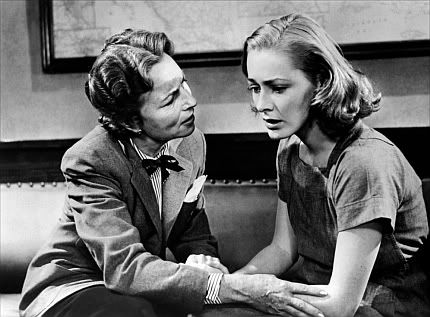
Eleanor Parker (r.) with Agnes Moorhead, in Caged (1950)

The death has been announced of actress Eleanor Parker, at the age of 91. The headline mentions Parker's portrayal of the Baroness in the 1965 movie version of The Sound of Music, which I suppose is appropriate in some ways what with the recent live TV version of the stage show. But Parker was actually nominated for the Best Actress Oscar three times, even though she never won. The first is for Caged, which I pictured above. Unfortunately, that was the year that All About Eve and Sunset Blvd. were released, making for tough competition at the Oscars, even though surprisingly neither film garnered trophies for the actresses.

Parker would be nominated again the very next year for playing the wife of violent detective Kirk Douglas in Detective Story, with the last being for playing an opera singer overcoming serious illness in Interrupted Melody.


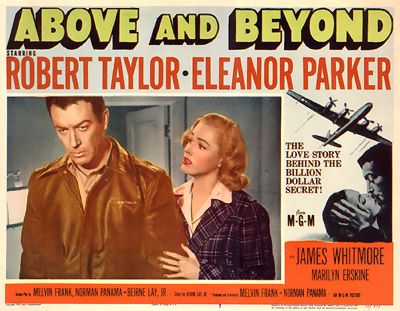
Above and Beyond didn't garner Eleanor Parker an Oscar nomination, but it's still a worthwhile movie about Paul Tibbets, the US Army officer who led the mission to drop the atomic bomb on Hiroshima at the end of World War II. Not knowing what was going on must have been extremely difficult for the wives, and Parker does a good job of portraying that dilemma.

TCM is probably furiously editing their annual obituary piece, which as far as I know has not yet aired. I don't know when or if there's going to be a change in the programming lineup to honor Parker.

Monday, June 24, 2013

Detective Story

Tonight being the final Monday in June, we have one more night of TCM's Star of the Month Eleanor Parker. The night kicks off at 8:00 PM with Detective Story.

The star of the movie is Kirk Douglas, playing Det. James MacLeod, a police detective at New York's 21st precinct, in one of the less glamorous parts of town. Parker plays his wife Mary, and she'll have a bigger part to play later in the movie. But for now, Detective story looks on its surface to be one of those "slice-of-life" movies about a day in the life of a police precinct, with all the nutty people who come in and out of the precinct station. Indeed, the movie starts off with a small-time crook who embezzled some money from his business. But things pick up fairly quickly when the lawyer for Karl Schneider (George Macready is Schneider) shows up. Schneider is a shady "baby doctor" who Jim knows has to be a criminal in some way. And Jim hates the guy, in part because he and Mary have been trying unsuccessfully to have a baby of their own. Schneider's lawyer knows about Jim's hatreds, which are apparently well-known in general, because he's been the subject of quite a few complaints of police brutality, enough that his superior, Lt. Monaghan, has to warn him not to do anything violent. Which, of course, means that we'll be waiting all movie for Jim to blow his stack.

It almost comes when Jim thinks he's about to get Schneider because he's got a witness who will pick him out ot a lineup. That is, until Schneider bribes her not to pick him out. And then there's a victim of one of Schneider's botched "procedures" who could also identify Schneider. Except that she dies in hospital before she's able to finger Schneider. It's enough to make Jim want to smack Schneider, and that leads to Mary getting called in by Monaghan. There's a good reason Mary hasn't been able to get pregnant, and part of the reason why -- although Jim doesn't know it -- involves Schneider. The Production Code limits what the script is able to talk about, and I'm even more trying not to give too much away, but even with this limited description you should be able to put two and two together.

Meanwhile, there are all the other subplots going on in the station. Cathy O'Donnell plays the sister-in-law of the embezzler we saw at the beginning of the movie, and she's trying to help repay some of the embezzled funds, because the guy only did it for her sister. Joseph Wiseman, who would later play Dr. No, is a small-time burglar. William Bendix plays Douglas' detective partner. And Lee Grant shows up as a shoplifter. Even though the main forus of the movie is the conflict between MacLeod and Schneider, all of these supporting characters are quite good at bringing color to the proceedings.

Kirk Douglas is intense, as always. Some people may find his acting style too intense, but in Detective Story, I think any problems aren't with Douglas' acting, but with the script, which makes Douglas be this violent. I don't know if the motivations given for why Jim is such a firm believer in the law, and why he's so quick to get violent about it. Sure, there's a lot of police brutality in real life, which is in contrast to the normal portrayal of police during the Production Code era. But Jim MacLeod is the sort of person who in real life would probably be a criminal himself, with only the uniform giving him free rein to commit his violence under color of law The fact that we give government so much power naturally draws in people who have a predisposition to want to use such powers. A fundamentally good guy whose simply overzealous? I don't think so.

But, whatever flaws Detective Story has, they're relatively minor. On the whole it's an excellent movie and one that's well worth seeing. It's also received a DVD release if you should miss tonight's showing.

Monday, June 17, 2013

Above and Beyond


TCM is showing something like 30 movies as part of Eleanor Parker's time as Star of the Month. Since they only have four weeknights to do it, that means that the movies, starting at 8:00 PM Monday, tend to continue well into Tuesday morning. Such is the case with Above and Beyond, which is airing tomorrow morning at 11:15 AM.

Robert Taylor gets top billing as Lt. Colonel Paul Tibbets. If that name sounds familiar, perhaps it should: Tibbets' claim to fame is as the pilot of the Enola Gay, the US B-29 bomber which dropped the atomic bomb on Hiroshima, Japan, in August 1945. Above and Beyond is the story of Tibbets and of the program to train bombers for the mission to drop that bomb on Hiroshima. But before they can drop the bomb, we have to go back a few years. Tibbets is serving as a pilot in the North African theater, running bombing raids over Tunisia that he considers pointless. So he tells his superiors this in no uncertain words. It costs him a promotion, but brings him to the attention of Major General Brent (Larry Keating). Brent is in charge of part of the atomic bomb mission, although at first Tibbets has no idea that there's any sort of atomic bomb being developed. For now, Tibbets' mission is to pilot test flights of the B-29. Part of the proposed atomic bomb mission involves a very long flight to the target, and then back from the target, which means that a new bomber capable of handling such long range flight, as well as the aftershock, is neccessary. And Tibbets is the right man to test whether the B-29 will be that suitable bomber.

So Tibbets heads out west, much to the dismay of his wife Lucey (Eleanor Parker), who is left behind in Washington with their son. The testing goes well enough that the generals decide the B-29 will be OK for the atomic bomb mission, and it's at this point that they finally let Tibbets in on the real purpose of his mission, which will ultimately be to drop a bomb of such hitherto unimaginable destructive force that the Japanese will have no choice but to beg for surrender. It's Tibbets' job to find the suitable crew to fly the plane that will drop the bomb, and to train them. There's one catch: he's not allowed to let any of them in on what's really going on, as security is understandably exceedingly tight. Tibbets and the rest head out to Wendover Air Base, on the Utah-Nevada border, to train for the mission. Eventually, to try to make Wendover appear more like a regular air base, the men's wives are allowed to join them, although the women are obvoiusly not allowed in on the real point of what's going on at Wendover. As you can imagine, this would be pretty big strain on a marriage, as Tibbets has to look like the bad guy a lot of the time in order to keep things secret.

It's no surprise that the question of whether dropping the atomic bomb was the right thing to do became a point for debate among historians decades after the war. (Charlton Heston, in his Private Screenings interview with Robert Osborne, argued that it saved his life: he was stationed in Alaska at the time, but was certain to be part of the force that would presumably have had to invade Japan's Home Islands had the bomb not been dropped on Hirsohima.) However, Above and Beyond was only made a half dozen years after the bombing, so it's understandable that there's no question that dropping the atomic bomb could be anything less than completely morally just. To be honest, I think skipping that question makes for a better movie. Considering all that had previously gone on in the war, it's not as if the people fighting at the time, not having any clue about the long-term radiation consequences of dropping the bomb, would have had any moral compunction about using it.

So, Above and Beyond gives us a more straightforward look at the people involved. I wouldn't be surprised if all of the main people in the film are portrayed even more positively than they were in real life, but that's Hollywood for you. Still, Taylor is quite good as the man who has to keep a really difficult secret, with Parker does well as the woman who must, unless she's a complete idiot, realize there's something big going on, but also knows she can't ask about it. As much as it must have been tough for the military wives to deal with their husbands being abroad fighting the war, I can't imagine it would have been much easier to follow their husbands to some God-forsaken place like Wendover, only to discover that they're being kept out of the loop as to what's going on. James Whitmore, who plays the security officer who informs Tibbets of the real nature of the mission in the first place, while also ensuring everything remains a secret.

I don't know quite how accurate Above and Beyond is, but even if it does get any of the personal history wrong, it's still a very well-made film. It's received a release to DVD from the Warner Archive.

Monday, June 3, 2013

TCM Star of the Month June 2013: Eleanor Parker

Now that we're into the first full week of a new month, we get a new Star of the Month on TCM, and this time it's a real star as opposed to the "tough guys" we had back in May. The movies of Eleanor Parker will be gracing TV screens tuned to TCM every Monday night in June. On this first Monday in June, we get several of Parker's early films starting with her very first movie, Busses Roar, at 8:00 PM. This short (about an hour) B movie is part Grand Hotel, and part Speed, at least the Sandra Bullock movie with that title. The denizens of a bus station at the start of America's involvement in World War II have to deal with a plot by the Nazis to time-bomb a bus so that it will blow up near an oil refinery that a Japanese sub off the coast can then bomb. An interesting idea that I'm really looking forward to; unsurprisingly, a little B movie like this hasn't even gotten a DVD release via the Warner Archive.

Two of the movies later in the night might be more well-known. First, at 11:00 PM, is Between Two Worlds. This 1944 film was a remake of the 1930 movie Outward Bound, so if you want to know the plot, click on the link. Interestingly enough, Outward Bound is on this week's schedule, at 6:45 AM Friday, so you can watch both versions this week.

And then there's Mission to Moscow, overnight at 1:00 AM. This is the story of US Ambassador to the Soviet Union Joseph E. Davies (played by Walter Huston), as told by Davies himself in memoirs he wrote. I don't know whether Davies was a stooge, incredibly naïve, or both. But Davies was ambassador from 1936 to 1938, before being reassigned to Belgium. This was the period of Stalin's notorious show trials, which led to a purge and millions of people winding up in the Gulag. And yet the film, released in 1943, is a puff piece, because after all both the US and Soviets were fighting the Nazis, and we had to keep from pissing them off. And Franklin Roosevelt apparently really wanted this film made. I always find it interesting how, when it comes to a movie like this, there are attempts made to hand-wave away the propaganda with, "Well, you have to look at it as a product of its time," but when it comes to the anti-Communist movies that came out after the war, there are never any excuses like that made.