Showing posts with label Janet Leigh. Show all posts

Tuesday, April 28, 2026

Ann-Margret is 85!

Today marks the 85th birthday of actress Ann-Margret, who was born in Sweden but became an American citizen before the age of 10. TCM is honoring the occasion with four of her movies:

8:00 PM Bye Bye Birdie
10:00 PM The Cincinnati Kid
midnight Once a Thief
2:00 AM Made in Paris

I haven't seen Made in Paris, so I'm planning to record that. However, I had Bye Bye Birdie on my DVR, so I watched that in order to write up a post on it for tonight's airing. Bye Bye Birdie is, of course, based on a musical, and before that, derived from an idea that a Brodway writer had when popular singer Elvis Presley was drafted into the Army.

Jesse Pearson plays Conrad Birdie, a singer popular with the teenaged girls because of his sex appeal who gets drafted into the army, causing an uproar amongst the girls of America. Songwriter Albert Pearson (Dick Van Dyke), hearing about the story, hopes he can write up a song quickly for Conrad to sing before Birdie goes off to the Army. Meanwhile, Albert has a complicated personal life. He's got a girlfriend Rosie (Janet Leigh) who should be his fiancée by now. But Albert's mother Mae (Maureen Stapleton) helped found the family music publishing business and consistently guilts the devoted Albert into not leaving. Rosie unsurprisingly wants Albert to choose between her and his mother, and it seems he's choosing his mother.

Meanwhile, The Ed Sullivan Show (with Sullivan playing himself) has the idea of putting Birdie on the show before he enlists, and even have Birdie kiss one of his legion of fans. Rosie has the membership rolls of the Conrad Birdie fan club somehow, and randomly picks a girl from the small town of Sweet Apple, Ohio. That girl is Kim MacAfee (Ann-Margret), who has a happy life with her kid brother, her parents (Paul Lynde and Mary LaRoche), and a boyfriend in Hugo Peabody (Bobby Rydell). Kim gets the call from New York, and she's naturally thrilled about having been chosen to represent the town of Sweet Apple to America, and get a kiss from Birdie.

Not everyone is thrilled, however. Hugo is ticked, fearing that he's going to lose Kim to Birdie. Dad also doesn't like it so much. He's still responsible for Kim, of course, and doesn't care for Birdie's music or the way in which Birdie drives everybody wild. But he warms to the idea when Albert suggests that perhaps Mr. MacAfee could get on TV too. Meanwhile, the subplot involving the long-simmering relationship between Albert and Rosie keeps rearing its head although one would think in a musical like this that Rosie and Albert are going to have a happy ending.

And then there's a twist. TV production is a complicated thing, and in the case of the Ed Sullivan Show part of that includes making certain everything times out properly considering that it's live TV. There's time planned for Birdie and Kim, although that gets cut into by Mr. MacAfee's desire to speak as well as MacAfee trying to promote the mayor, too. Worse is that the Russian Ballet which is also scheduled to appear that night decides it's going to do a number that would take up almost all the time allotted to the Birdie segment.

Bye Bye Birdie is the sort of movie that fans of musicals are going to like. If you're not that much of a fan of the artificiality of musicals, and I include myself in that genre, then it may not be quite as appealing. For the most part, everybody does well, although the material is such that at times it felt much too forced for me. Still, as I said, I can understand why some people are going to love Bye Bye Birdie.

Friday, March 27, 2026

A quarter century before Oh, God!

Another of the movies that's been sitting on my DVR for a bit is the 1951 MGM version of Angels in the Outfield. It's getting another airing on TCM, somewhat surprisingly not as part of a day of baseball movies considering that baseball season is right about here. That airing is tomorrow, March 28, at 1:45 PM.

The movie was filmed in part on location in Pittsburgh, at the old Forbes Field which I think went away in 1970 for Three Rivers Stadium, one of those dual-use monstrosities which has since been demolished itself and replaced with purpose-built stadia for baseball and football. The Pirates were a perennially poor team, and the version here is even worse, with a good portion of the blame being given to manager Guffy McGovern (Paul Douglas). They're so bad that the newspaper is putting a bunch of its writers, including the women's editor Jennifer Paige (Janet Leigh) on the story to try to figure out what's ailing the team. This, even though she doesn't know anything about baseball.

Jennifer goes to a game and discovers that Guffy is incredibly irascible and prone to harsh language, which we of course don't hear since there was a Production Code. (Instead, special effects are used to obscure whatever dialogue is used when Guffy is chewing out his players or the umpires. Also blaming the manager is the sports reporter who handles the radio broadcasts of the games, Fred Bayles (Keenan Wynn). For this, Fred gets fired and becomes an even more ardent opponent of Guffy's.

One day after a game, Guffy is alone out on the field when he hears a voice coming out of nowhere. That voice (voiced by James Whitmore), claims to be an angel, chiding Guffy for his bad language among other things. Indeed, heaven has decided that the Pirates are going to continue to be lousy cellar dwellers until Guffy changes his ways. Unsurprisingly, Guffy doesn't believe that this voice is that of an angel, so the angel responds by sending a bolt of lightning down even though there's only like one cloud in the sky. So Guffy does believe it's an angel, not that he's going to tell anybody considering the obvious fact that nobody's going to believe him.

Amazingly, the team does start doing better. And then one day the nuns from the girls' orphanage (played by Spring Byington and Ellen Corby) take a group of girls to the ball game. One of them, Bridget, excitedly declares that she can see angels! The nuns don't believe her since they can't see the angels. But Jennifer overhears the story from an attendant at the field, and writes it since it's an obvious human interest story. That makes the whole angels thing a national story, although again nobody really believes that there are angels guiding the team, do they? Except maybe Guffy and Bridget. Jennifer, by this time, starts becoming a bit of friends with Guffy as he's been reforming himself in rather strange ways like reading Shakespeare so he can chew the umpires out in Shakespearean language. He even thinks about adopting Bridget, although he realizes that's not really going to happen since they don't normally let single men adopt orphaned girls. You can guess where that part of the story is going, of course.

Matters hit a head when Guffy gets hit in the forehead by a line drive during a game. Concussed, he confesses after the game that there really have been angels helping him. Obviously, nobody believes this any more than they believed Bridget. In the case of a little girl, it's harmless, but when it's the team manager, there's a rather more pressing issue. It leads to an investigation, with Commissioner Hapgood (Lewis Stone) brought in. Guffy causes a ruckus, and that leads the angels to decide jsut before the big game that they're no longer going to help Guffy and the Pirates.

Angels in the Outfield has a lot of the tropes that are common to the more family-friendly sports movies, so it's not to difficult to see what's going to be happening. But it's done with the sort of earnest charm that old Hollywood had, and, thanks to the professionalism of stars like Paul Douglas, Angels in the Outfield actually works.

Sunday, April 20, 2025

Tony Curtis in Merry Olde England

Another person who was honored last August in Summer Under the Stars is Tony Curtis. TCM showed a couple of hs movies that I hadn't seen before, or even heard of. First up is a period action movie from fairly early in his career: The Black Shield of Falworth.

The movie is set in the reign of English King Henry IV (played by Ian Keith showing up briefly toward the end), so around the beginning of the 15th century. The Earl of Alban (David Farrar) is traveling through the countryside with his retinue, and stops at a farm in search of water. The farmhouse is owned by Bowman (Rhys Williams), who is guardian to siblings Myles (Tony Curtis) and Meg (Barbara Rush). Alban and his men see a pretty young woman, so of course they think they can have her, which ticks off poor Myles. Myles fights back, which is a dangerous thing to do, so the three of them are forced to leave.

At the local church, the friar informs then that Myles' late father left a signet ring with a heraldic shield on it, as well as a letter of introduction to the Earl of Mackworth (Herbert Marshall) stating that this is the son of Falworth. Apparently, the elder Falworth did something than him afoul of the monarchy, with the punishment that that Falworth shield be stricken from the heraldic record and that the entire Falworth family be wiped from the face of the earth, which is why Myles and Meg are in danger. Mackworth is, however, a friend, and puts Myles and Meg into service: Myles as a squire, and Meg as a servant to Lady Anne (Janet Leigh).

Myles immediately proceeds to be a truculent little bastard, rebelling just for the sake of rebellion while trying to find out the truth about the shield on the ring. He also meets Anne and immediately falls for her, which is a problem since the two are, as far as everybody knows, not of the same social class. She's also going to be betrothed to Walter Blunt (Patrick O'Neal), who is at this point head squire and not yet knighted. Anne eventually falls in love with Myles as well. But all of this is buildup to the climax.

It's really the Earl of Alban who has been plotting against King Henry. When Henry plans to visit Mackworth Castle, part of the festivities require jousting against Henry's companion, a count from Burgundy. Mackworth names Myles, but only someone who's been knighted and joust against a count. Alban recognizes the Falworth shield and demands that Myles should be killed. Henry gives Myles the chance to save himself in trial by combat against Alban. Alban, however, has an even more devious trick up his sleeve, which is to have Henry killed while observing the trial by combat.

Henry IV was a real person, but most of the rest of the dramatis personæ in The Black Sheild of Falworth are wholly fictional. Universal conceived this as an action movie in color and widescreen as an attempt to get people to shut off their TVs and come back to the theaters. So while the movie is short of plot, it's another movie that's more than entertaining enough. This, even if Tony Curtis doesn't exactly personify late medieval England; this is the movie about which the legend of Curtis saying "Yonder lies the castle of my fodder" sprung, although Curtis doesn't say anything like that.

So The Black Shield of Falworth certainly isn't great, and it's easy to see why this isn't one of Tony Curtis' most remembered movies. Much better was still to come for Curtis in his career.

Wednesday, May 22, 2024

Words and Music

Yet another movie that's been sitting on my DVR just waiting for another TCM airing so that I could watch it and do a post on it is the musical "biopic" Words and Music. That next showing on TCM is tomorrow, May 23, at 5:45 PM, so with that in mind I sat down to watch it in order to be able to do a post on it in time for you to watch the next showing.

After an opening credits sequence set over a chorus singing one of the songs of the writing team of Richard Rodgers and Lorenz "Larry" Hart, we're introduced to Rodgers. Well, not Rodgers himself, but Rodgers as a character, played by Tom Drake. The fact that a decidedly second-tier star like Drake is playing Rodgers is a good hint that this is much more a story about Lorenz Hart.

Back in 1919, Lorenz Hart was a struggling songwriter who came up with all sorts of lyrics that the smart set might have thought were witty, but didn't have any music to go with them. His friend Herb Fields (Marshall Thompson), realizing that Larry needed a composer to put those words to music, decided to introduce Larry to one of his friends, that of course being Richard Rodgers. Rodgers is mildly confused considering that Larry doesn't really seem to be listening to his music, but some time later Larry tells him he does like one of his melodies and they should put the two together.

However, actually trying to sell any of their songs is much more difficult. Eventually Richard gets to the point that he thinks seriously about giving up trying to become a composer, telling his father that he's going to quit music to go into selling children's apparel. But Larry ropes him back in asking him to give it one last chance, and wouldn't you know it, but the Garrick Gaieties comes along introducing a bunch of new faces to Broadway, with Rodgers and Hart being asked to be among those new faces, even if not on the onstage side.

One person who might make a nice new face is struggling actress Peggy Lorgan (Betty Garrett). Larry does try to get her a starring role in the gaieties, but he's not a producer or casting agent, with the result being that another actress, Joyce Harmon (Ann Sothern) gets the part. Still, the two develop a nice friendship together. It goes far enough that Larry decides he's going to ask Peggy to marry him, but she turns him down. This is where the "biopic" really starts getting sanitized, as if it weren't already being sanitized to this point.

In real life, Lorenz Hart was gay at a time when one couldn't really be gay in public life. Apparently, he did have an actress with whom he was good enough friends that he'd ask her to marry him in what would have been an obvious sham relationship in the Tab Hunter/Natalie Wood vein, but that actress turned him down. Again in real life, being gay and not being able to be so publicly led Larry to engage in heavy drinking and other self destructive behavior that led to his death just before the age of 50, as well as to Richard Rodgers' decision to team up with Oscar Hammerstein when Broadway came calling with what would be the musical Oklahoma. Hart did live long enough to see that become a success, dying not long after.

So while Words and Music really plays fast and loose with the facts, in some ways that's not the reason one would watch a movie like this. In a film about a composer, it's always going to be just as much if not more about the music as about the music. And as we all know, Rodgers and Hart wrote quite a few of the great pre-war songs from the Great American Songbook. Not only is there the music, but MGM took a whole bunch of its musical stars under contract and had them do cameos singing various of the Rodgers and Hart songs. These include Judy Garland, Gene Kelly, Lena Horne, Perry Como, and others.

Words and Music may be utter nonsense as far as the historical facts go. But if you like vintage Broadway music, you'll get that in spades. That, combined with MGM's superb Freed Unit production values. Maybe someday somebody will put the real story of Lorenz Hart on film. But I don't think it would be as vivacious a movie as Words and Music.

Saturday, February 10, 2024

I bet pi would be lonely too

Some years back, I tuned into TCM in the middle of a then new-to-me 1970s movie called One Is a Lonely Number. I made a point of waiting for it to show up again in order to be able to record it. So when TCM did run it again several months back, I was finally able to get that recording. Recently, I got around to watching it, so as always, here's the review.

"James, what are you doing"? So says Amy Brower (Trish Van Devere) to her husband James in their San Francisco-area apartment as the movie opens. James, however, is not about to be her husband that much longer. He's leaving Amy for reasons she doesn't understand. Indeed, he's called in sick to his job as a professor at the local college, administered the final exam early, and left. And this is the era when a lot of women like her, even if they didn't have children to look after, didn't do actual paid work.

Not only that, but Amy doesn't have much in the way of real friends. The closest would probably be Madge (Jane Elliot). She introduces Amy to Gert (Janet Leigh), who is the head of the local chapter of what she calls the "divorcées' league", and has decided ideas about the value of men, having married and divorced five of them. But having been through so many divorces, she also knows the ins and outs of the divorce process, this being the days before no-fault fivorce was common.

The other "friend" or at least someone who's going to become a bit of a friend, is Mr. Provo (Melvyn Douglas). He runs the local produce stand, and the Browers have been customers of his through their entire marriage, so he sees both of them quite a bit and knows their tastes in fruits and vegetables. He's also a widoer, so he knows a bit about moving on after the end of a marriage, although of course his marriage ended in a rather different way from Amy's.

Still, Amy needs a job, and when she goes to the employment agency, they don't have much for her since she doesn't really have all that much in the way of marketable skills, having gotten the proverbial "MRS degree" in college: there's not much use for art history majors with philosophy minors. The man at the employment agency gets her a job, but it's only as a lifeguard at the municipal pool. And then he shows up one day at the pool trying to put the moves on her, which is really creepy.

Will Amy ever be able to find happiness in life again? Will she need a man to do it? With the destruction of the Production Code a few years prior to this movie, it's easy to see why filmmakers would be interested in something with more grown-up themes. And maybe this was original for 1972 when it was made. But 50 years on, it feels totally unoriginal and the sort of thing that would be made nowadays as a TV movie of the week for one or another of the cable channels or streaming platforms.

One Is a Lonely Number isn't really a bad movie, but there's nothing particularly strong to recommend it, either, not even the presence of Janet Leigh and Melvyn Douglas.

Monday, January 22, 2024

The Man of Property

You may have heard of The Forsyte Saga a series of books by British author John Galsworthy. Set near the end of the Victorian era, it's the sort of material that would be perfect for studio-era Hollywood to make a picture out of. Indeed, MGM had the rights, and in the late 1940s made a movie adaptation of the first book, a movie called That Forsyte Woman.

The movie opens with Irene Forsyte (Greer Garson) running into a hospital looking for a man to whom she is not related. So the man at the desk isn't so sure to let him in, but Irene is so distraught that they let her in. She's followed by two more people named Forsyte, cousins (not hers) Soames (Errol Flynn) and Jolyon (Walter Pidgeon). Irene doesn't want to see Soames, so Jolyon, a widower, takes her back to his house, where his adult daughter June (Janet Leigh) is none too pleased to see that her father has brought this woman home with him. Flash back to how everything wound up this way....

Soames is a "man of property", the latest in a long line of Forsytes involved in some sort of proper business. He's met Irene, a music teacher who is on her way to becoming a spinster, and seems to love her, which is a bit of a minor scandal because Forsytes always marry the right person. The rest of the family wonders whether she's a gold-digger, but Soames says he's been pursuing her for a year without her saying yes. Needless to say, she does eventually say yes, but the marriage doesn't quite go to plan, which is how we wind up with that opening scene.

Jolyon is the black sheep of the Forsyte family. He married and the wife died suddenly, with the rest of the Forsytes taking custody of daughter June. Jolyon is a struggling artist who went off to Paris but, as the flashback opens, is back in London where some of his works are part of an exhibition. Soames goes there looking for something good, while Irene falls in love with one of Jolyon's paintings. You get the feeling that Irene and Jolyon might make a better couple than Irene and Soames, but Soames is a jealous man who, once he gets a possession, isn't about to let it go. And Irene is going to become one of his possessions.

You'd also be right about Irene and Jolyon being better matched. But these are the Forsytes, and the thought of divorce is so horrifying to them that they'd never permit it. And Soames wouldn't permit it anyway. So things are going to have to reach that ending some other way. Enter Philip Bosinney (Robert Young). He's an architect, and of the sort who is exactly everything that Forsytes don't care for, being interested in new styles and materials while the Forsytes are decidedly old school.

But Bosinney and June Forsyte have met, and fallen in love. This being the late Victorian era, Bosinney feels he can't marry June until he's got an independent stake of his own, which means some sort of commission that's going to get his business off the ground. Irene, who has become friends with June since they're both different from the stodgy side of the Forsyte family, obliges by introducing the couple to the rest of the Forsytes as well as getting Bosinney hired to design the country house Soames wants to build for her. But Irene finds herself falling in love with Bosinney, too....

That Forsyte Woman is the sort of material that MGM could make really well, and in this case, it's definitely another quality production. It might not be so well remembered, something I think is down to the unorthodox casting. Errol Flynn wanted to stop the typecasting of the swashbuckling action star, so he decidedly wanted to take on the part of Soames when you might think Jolyon was more to his perceived character. Walter Pidgeon is also the person you think would be more suited to Soames. Flynn shows that he really was a good actor, while Pidgeon, well, not quite so much. Not that he's bad; it's just that he doesn't really overcome his typecasting the way Flynn does.

That Forsyte Woman is absolutely worth watching as another example of the quality MGM could bring to its period productions.

Tuesday, October 31, 2023

Houdini

Today marks 97 years since the death of magician and escape artist Harry Houdini. His life story was loosely turned into a movie in the early 1950s with the unsurprising title Houdini. That movie is available on demand on Pluto TV, so I recently watched it since I figured Halloween was a suitable time to do a post on the movie.

Tony Curtis plays Harry Houdini (1874-1926), and as the movie opens he's working the carnival circuit as part of a show run by Schultz (Sig Ruman). Schultz doesn't necessarily care for Houdini's desire to do magic on stage, having hired him for other reasons. One evening at the show, in the audience is Bess Rahner (Janet Leigh, Tony Curtis' real-life wife at the time). Bess is infatuated with Harry, and keeps going to his shows, with him eventually getting her to realize that the two are in love, leading to an elopement, much to the chagrin of his mother (Angela Clark).

The two do traveling revues since Harry absolutely wants to make it as a magician, while Bess would be happy with him settling down and taking a normal job. After some abuse from a bunch of miners out west, Harry agrees, working in a lock and safe factory. But Harry still has the itch to do magic, so he takes his wife out to a gathering of the magicians' society for dinner. There, he goes up on stage to put on a strait-jacket, from which he's the only one to escape. His magic career is on its way.

Houdini's specialty becomes escape acts, escaping from handcuffs, locked boxes, submerged boxes, and a lot more. The career also takes him to Europe, where he hopes to meet a reclusive magician who supposedly learned the secret of dematerialization.

But them Mom dies, and Harry goes into a funk, not performing in public for years, wanting to make more contact with his mother. But Harry knows that the spiritualists who claim they can contact people on the other side are a bunch of fakes, so he decides he's going to debunk them publicly.

History tells us, however, that Houdini would die on Halloween in 1926. Houdini died from a ruptured appendix that wasn't diagnosed until too late, actually doing some shows with a high fever before dying in hospital. Not that this sort of death would be cinematic, however. So the movie portrays his death in a slightly different way....

Unsurprisingly, as with other Hollywood biopics of the era, this isn't the only liberty the movie takes with the truth. Despite the inaccuracies, Houdini is certainly an entertaining enough movie. Tony Curtis is a natural as Houdini, and Janet Leigh is appealing enough as his wife. The movie is also photographed in lovely Technicolor. In short, Houdini is good old-fashioned Hollywood entertainment.

Sunday, March 1, 2020

See You in Hell, Darling


There are some movies that aren't very good, but that received an Oscar nomination in the Best Original Song category, so TCM could run them in 31 Days of Oscar. A good example of this is An American Dream.

Stuart Whitman plays Stephen Rojack, a war hero who came home and got a TV talk show in Los Angeles, which is a crazy sort of show that has him ranting to a couple of guests who don't seem allowed to get a word in edgewise, while taking phone calls from the home audience. But he never actually puts the viewers' voices on air, just throwing out rapid-fire rejoinders based on what the viewers are supposedly saying.

One of those viewers is Deborah (Eleanor Parker), who just happens to be Stephen's estranged wife. She's waching from her bedroom in a penthouse apartment in a building her father Barney Kelly (Lloyd Nolan) built for her, while carrying on an affair with a guy who's in bed with her. She calls in not to talk about tonight's topic, which is police corruption and how they're letting the mobster Ganucci get away with mayhem; instead, she calls to taunt Stephen, she just having returned from Europe.

Stephen has decided that he's going to file for divorce since this is clearly a loveless marriage, and goes to Deborah's penthouse after the show. She absolutely does not want to grant a divorce, and tells Stephen this most histrionically, continuing to taunt him, throw things at him, and even break a liquor bottle and threaten him with that.

The struggle continues from Deborah's bedroom out to the balcony after Stephen stupidly tries to wash his face in the fountain out there rather then just getting the hell out of the apartment. She throws more stuff at him, and in the struggle, Deborah ends up on the railing. Eventually she goes over, falling to her death 30 stories below, in an incident that looks as though it might have been an accident Stephen could have prevented, or possibly getting pushed by Stephen -- make your own judgment.

Up to this point, An American Dream has been spectularly, hilarity-inducingly awful. Unfortunately once Deborah falls off the balcony the movie switches to being just tediously bad. Stephen gets down to street level where Deborah's body has been run over by a car... containing Ganucci (Joe De Santis), who for whatever reason returned to California despite having a subpoena to testify before the grand jury hanging over his head. Also in the car is Ganucci's nephew Nicky (Les Crane), and Nicky's girlfriend Cherry (Janet Leigh), who just happened to be Stephen's old girlfriend before he knocked her up and left her for Deborah and her fabulously wealthy father.

The police investigate and think that Stephen murdered Deborah, while he bizarrely claims suicide, and bizarrely doesn't clam up and request a lawyer the moment he's brought in for questioning. Stephen tries to ask Deborah for help, but her mob boyfriend and his friends are pissed with Stephen first for railing against Ganucci and then being the reason why Ganucci got brought in for questioning as well.

This material was based on a novel by Norman Mailer that I haven't read. In theory there's some interesting stuff here, but somehow it went way off the rails, which is a surprise considering the cast. Now, if it had been Skidoo or Valley of the Dolls-level bad, it would be fun. But as I said, it doesn't keep up that level once Eleanor Parker's character dies, and that's a shame. The movie understandably bombed at the box office, thanks in part to scathing criticism. Warner Bros. responded by renaming the movie See You in Hell, Darling, but that didn't help.

You can now watch An American Dream on DVD courtesy of the Warner Archive.

Sunday, July 16, 2017

Night of the Lepus

I noticed that Night of the Lepus is available on DVD courtesy of the Warner Archive, so I watched it off my DVR in order that I could do a full-length post on it.

The movie starts off with a dramatized news report of how mankind introduced rabbits into various places that weren't the species' natural habitat, and how it resulted in the rabbits getting loose and, well, breeding like rabbits so that they became a pest. Among the places mentioned in this report is the US Southwest.

Cut to the real action. Cole Hillman (Rory Calhoun) is an Arizona rancher who's found that the rabbits are eating him out of house and home. He doesn't want to poison them because of the obvious deleterious effects that would have in the longer term. So he calls Elgin Clark (DeForest Kelley), the president of his old alma mater, to see if their sciences department can do something. Fortunately, there are two visiting researchers, the Bennetts (Stuart Whitman and Janet Leigh) who are doing relevant research, trying to find some sort of contagious disease that will leave the rabbits sterile.

Unfortunately, the Bennetts have an idiot daughter Amanda. She doesn't understand what a control group is, and thinks it unfair that her parents are experimenting on cute little bunnies. So she switches two bunnies between the control and experimental groups, and then asks her parents if she can keep one of the bunnies from the control group. And this is where her parents are profoundly stupid in a way that severely tests one's disbelief: they let her keep one of those rabbits. She naturally picks the one she moved from the experimental group. Even dumber, she brings the bunny with her when the Bennetts visit the Hillman ranch! The bunny gets away.

Unfortunately, the Bennett's research is a failure in that their injections don't lead to the rabbits' becoming sterile. The side effect is that they become gargantuan, like 150-lb rabbit big. Oh, and they also become carnivorous, so they start attacking people.

The idea behind Night of the Lepus really isn't a bad one. In fact, as I was watching it, I couldn't help but think of Them! and the giant ants. And yet, Night of the Lepus has the reputation of being a ridiculous almost cult classic. Why is this? I think that the movie winds up being not as good as Them! in part because the script requires people to act in utterly implausible ways -- real life scientists would never have let their daughter screw with the experiment like that. There's also the fact that this one came relatively late in the horror cycle of dangerous creatures.

The bigger reason, I think, has to do with the effects. Every time they need to show the giant rabbits, there's this bizarre music, with regular-sized rabbits running around sets of miniatures. And then they took this footage and slowed it down. The result is just ridiculous unbelievable and laugh-inducing, and every time the action switches from the humans to the rabbits, any possibility of horror goes right out the window. And then there are the scenes when rabbits kill humans, which are even sillier.

Night of the Lepus is, however, ultimately well worth a watch both for the ideas and for its inherent silliness. The Warner Archive DVD is unfortunately a bit pricey.

Friday, July 10, 2015

Technically, Alfred Hitchcock is retro

FXM Retro has aired some decidedly recent movies, usually right at 3:00 AM or leading into 3:00 PM when the regular FXM block starts. Tomorrow morning at 3:00 and repeated at 1:15 PM is the 2012 movie Hitchcock.

Anthony Hopkins stars as Alfred Hitchcock, the famed movie director. In this movie, the action begins in 1959, just as North by Northwest is a big success. In fact, Hitchcock had a big string of successes in the 1950s, but the movie posits that Hitchcock still didn't have as much clout as you'd think he did. That's becautse when he comes across the source material for what would be his next film, Psycho, the studios are reluctant to let him film it the way he wants. Hitchcock has to put up a lot of his own money, and so there's a lot at stake riding on the success of that next film.

Well, not just for him, but also for his wife Alma (Helen Mirren). Alma had been one of the screenwriters for a whole bunch of Alfred's films back in Britain, and now serves a bunch of purposes for Alfred: helping deal with producers and actors, having good taste to understand what will work, and so on. But she's decidedly in Alfred's shadow, at least publicly. Everybody knows Alfred; people don't particularly know Alma.

And so, our movie version of Hitchcock looks at both the shooting of Psycho, which wasn't always easy because of the difficult subject matter, as well as the personal relationship between Alfred and Alma. It's well known that Alfred had a thing for icy blondes, which is why he cast so many of them in his movies, at least the great movies of the 1950s through to Marnie in 1964. How interested he was in the actresses themselves is a matter for debate; Janet Leigh (played here by Scarlett Johansson) supposedly said good things about Hitchcock after Psycho, while Tippi Hedren (not a character in the movie) had difficulty on the set of Marnie. As for the movie Hitchcock, Psycho costar Vera Miles (played by Jessica Biel) is shown warning Janet about the director's reputation, and Hitchcock is shown as a peeping Tom.

While the cat's away, the mice will play, so neglected Alma spends her days playing script doctor to crappy writer Whitfield Cook (Danny Huston) and eventually getting entangled enough in a relationship with him to spend her days working at his beach house. Exactly how serious their relationship was is left a bit ambiguous. But what isn't ambiguous about this movie's presentation of Alma is its presentation of her as more of a force behind Alfred than most people would think, including keeping production going while Alfred was ill. Alfred is known for having elaborate storyboards prepared such that the actual prodcution should in theory go like clockwork; supposedly this means that somebody who knew Alfred well enough would be able to make that clockwork run too.

I'm not certain just how much of the material in the movie is true; there are also dream sequences of Alfred talking to Ed Gein (the murderer who was the basis for the book that was made into the movie Psycho), but if this were a story about wholly fictitious people it would hold up quite well. Anthony Hopkins has the thankless task of trying to play a well-known larger than life figure, something that probably no actor would be able to do. Alma is less well known, so Mirren can do more of what she wants with her, and I think she does quite a good job as the woman behind the man.

Ultimately, Hitchcock is entertaining, at least if you go in expecting a dramatized version of Hollywood history.

Wednesday, October 15, 2014

Pete Kelly's Blues

If you liked Jack Webb last week in The D.I., you're in luck. One of the movies TCM is showing in honor of Star of the Month Janet Leigh was directed by and stars Webb. That film, Pete Kelly's Blues, airs tomorrow morning at 9:00 AM on TCM.

Webb, unsurprisingly, plays Pete Kelly. (Having your own production company making the movie helps.) Pete is the cornetist in, and leader of, a 1920s jazz combo, playing at a Kansas City-area speakeasy along with clarinetist Al (Lee Marvin) and drummer Joey (Martin Milner). This being the 1920s, it obviously means Prohibition, and all the concomitant problems that brings. One of the big problems is the rise of the gangster, which in this context means the protection racket. Local gangster Fran McCarg (Edmond O'Brien) wants to take over the entertainment racket, charging every band a piece of the action in order to be able to play. The band thinks it over and says no, with Joey being particularly strident in his view that the gangsters shouldn't be taking money from bands.

Of course, McCarg's offer wasn't a request; he's not going to let a little thing like the word "no" stop him. So while the band goes off to a private function, Fran is plotting to use force to get Pete and his band to comply. Janet Leigh finally shows up here, playing Ivy, the woman hosting the party and falling in love with Pete there, although at first the feeling is not mutual. On the way home from the party Fran's goons try to run Pete and has band off the road. Joey still refuses to give in to Fran, and when the gangsters continue their policy of vilently harassing anybody who says no to them, Joey gets in a fight with one of the underlings, thus sealing his fate. He abruptly gets rubbed out. This ultimately gets Pete to give in to Fran.

Of course, that's not where Fran's pressure ends. Fran has a girlfriend named Rose (Peggy Lee), although she's not particularly enamored of him any longer. Rose is a singer, and Fran is trying to push her career, reminiscent of James Cagney and Doris Day in Love Me or Leave Me. So Fran tries to push Rose on Pete's band, even though the styles of music aren't a mesh at all. Eventually Fran strikes out at Rose, and that's what gets Pete to do the right thing and cooperate with the law.

Even if Jack Webb weren't playing Pete Kelly, the movie would still have his fingerprints all over it: the clipped dialog and the obvious right versus wrong, practically hitting us over the head with all of it. Still, it's obvious from watching the movie that Webb had an affection for the material and as with The D.I., directs it almost as a labor of love: in addition to Peggy Lee's singing, Webb was able to get Ella Fitzgerald The result is a movie that, while it has its flaws, is a lot better than you'd think if you only knew Jack Webb from the 1960s version of Dragnet and the other TV shows his production company made at the time. (Martin Milner would go on to star in Dragnet's police-drama companion Adam-12.)

Pete Kelly's Blues did get a DVD release several years ago, but it seems to be out of print now, as the TCM shop no longer offers it for purchase.

Wednesday, October 8, 2014

Meat the Professor

After Dory Schary took over at MGM, the studio started making a bunch of little pictures in order to subsidize those big prestigious musicals they were putting out. I've mentioned some of those little movies before as being quite good, but some of them leave you scratching your head wondering what they were thinking making the movie. A good example of this latter category is Confidentially Connie, which will be on TCM tomorrow morning at 5:45 AM as part of Janet Leigh's turn as TCM's Star of the Month.

Leigh plays Connie Bedloe, and we first see her in a doctor's office, where we find out that she's pregnant. Oh, that's not a problem, since she's got a good husband Joe (Van Johnson) who is an English professor at the local college. The problem is that English professors at small New England liberal arts colleges don't make all that much money. And never mind what the couple is going to do when the baby comes. The good doctor wants Connie to eat lots of red meat so that the baby will be born strong and healthy. Red meat, however, costs money, and that's something the poor professor doesn't have enough of. So it looks like it's going to be fish, until Connie gives up her cigarette money to buy some good meat.

What's a poor couple to do? Well, both spouses have an idea. There's a chance at a promotion at eh college, as Dean Magruder (Gene Lockhart) is planning to raise somebody to a fuller professorship. If Joe can get that, it means more money for him and Connie. But there's a problem here in that his chief rival for the promotion is inviting the dean over for a dinner party, and planning to tip the scales by providing some good meat at the dinner, a cut that Joe and Connie can't possibly match. Connie's idea is different, and involves Joe's father Opie (Louis Calhern), who is a wealthy Texas rancher. Going into ranching would make far more money than being a crappy English professor.

Opie, meanwhile, has decided to take a few weeks off to visit his son and daughter-in-law. Unsurprisingly, he's appalled by what he sees; more specifically, it's the lack of red meat that appals him. So when he gets there, he hits opun a scheme involving getting the local butcher to claim he got a shipment of excess meat that allows him to lower the price of red meat, enough that Connie will be able to afford it. Opie will then pay the butcher under the table. Unfortunately, that plan backfires because all the other housewives in town find out about the low low prices and start storming the butcher shops.

It's all thoroughly ludicrous, even more so than a lot of Hollywood movies. I'm reminded of the Barbra Streisand film For Pete's Sake, which has as its climax Streisand trying to smuggle a truckload of cattle into New York. It's nuts, but the whole movie is set up as being silly so that when you have such a zany scene it works. Confidenially Connie, however, is firmly in the early-1950s MGM tradition of earnestness and a bit of a social conscience that turns out painfully pathetic. The "Black Americans" sequence in It's a Big Country comes to mind here. The result is comedy that doesn't work, and whatever message the movie is trying to send doesn't work either. Still, it's a movie that deserves a viewing just because of it's off-the-wall theme. And being one of the lesser movies that MGM was making to pay for the prestige movies, it's mercifully brief at 72 minutes.

Confidentially Connie is available on DVD from the Warner Archive collection, but I'd think it's much too expensive.

Wednesday, October 1, 2014

TCM Star of the Month: Janet Leigh


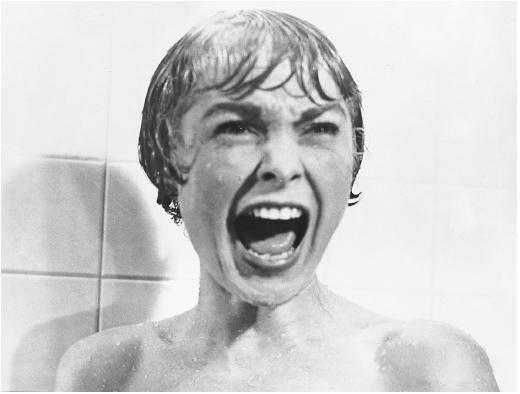
We're now in the first day of a new month, which is going to mean a bunch of new programming blocks coming up on TCM. The first is them is the Star of the Month, Janet Leigh. Leigh is probably best known for playing Marion Crane, the woman who steals $40,000 from her employer and takes a memorable shower in Alfred Hitchcock's Psycho. That kicks off prime time on October 29.


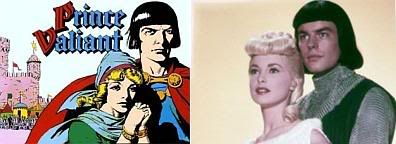
I noticed in doing a blog search for this post that I don't have too many photos of Janet Leigh. In fact, one of the few I had posted is for Prince Valiant, which being a Fox movie doesn't make it to this month's schedule, which is a bit of a shame.

On this first Wednesday in October, we get a bunch of Leigh's earlier movies, all from the 1940s, starting off in fact with her very first movie, The Romance of Rosy Ridge at 8:00 PM.

The movies will be continuing into the Thursday schedule (that from TCM's standpoint, where the day begins at 6:00 AM ET):

If Winter Comes at 10:00 PM;
The 1949 version of Little Women at midnight;
The Lassie movie Hills of Home at 2:15 AM;
Words and Music, a biopic about Lorenz Hart, at 4:00 AM;
That Forsyte Woman at 6:15 AM; and
The Doctor and the Girl at 8:15 AM.

Friday, December 17, 2010

Will Wendell Corey ever get the girl?

If you've seen enough of Corey's films, I think you'll realize that the answer to that question is a resounding NO! So, it's more interesting to see how Corey loses the girl. One good example of this is the Christmas movie Holiday Affair, which is airing tonight at 8:00 PM ET on TCM.

Janet Leigh plays Connie, who is a department store "spy": she's a comparison shopper for one of the stores, looking at the price and quality of products sold by other stores, only to return the goods. Naturally, department stores don't like this, and want their employees to report such spies to management. Connie buys a model train set from clerk Steve (Robert Mitchum), telling him honestly that she's a war widow with a son. Steve suspects Connie of being a spy, but doesn't turn her in, which gets him fired. In some ways, though, that's not such a bad thing, since Steve would really rather follow his passion of building boats out on the Pacific coast; he just needs the seed money and was working a "real" job to get that.

Connie's little kid, however, finds out about the train, and figures it's a Christmas present for him. Connie is still planning on returning it, but Steve feels really badly for the kid, so despite having been fired, he buys the same train set for the kid for Christmas. Complications ensue, but you know that at the end of the movie Connie and Steve are going to end up together.

Where does Wendell Corey fit into all of this? He plays Carl, who is Connie's fiancé. He loves Connie, but also realizes she doesn't particularly love him. He wants a wife and likes the kid, and also knows that the kid probably should have a father in his life. So for Carl, this is really just as much a marriage of convenience as it is a marriage of love. Carl can't undrestand why Connie could possibly be in love with Steve, especially since his situation is so unstable. Still, the casting of Wendell Corey makes it almost a certainty who is going to end up with the girl. (If it had been Bill Holden opposite Mitchum, as in Rachel and the Stranger, there would have been a more interesting dilemma.)

Despite the fact that you know how this movie is going to end, it's a great film for the holidays since it's completely undemanding but enjoyable in its relatively light story line. It got a release to DVD a few years back, both individually and as part of the same box set as two other Christmas movies I've recommended this month: All Mine to Give and It Happened on Fifth Avenue.

Saturday, October 9, 2010

Tony Curtis: The Vikings

Kirk Douglas' expression gives you an idea of just how silly the movie is
Tony Curtis and Kirk Douglas in the climactic fight scene of The Vikings (1958)

I listed the various Tony Curtis movies that will be airing tomorrow as part of TCM's 24-hour long salute to him. Some of them at least deserve a fuller-length blog posting. First up is The Vikings, which will be airing at 9:45 AM ET.

The movie starts off a couple of decades before the main action. The Vikings raid Northumbria, one of the kingdoms on the island of Britain, killing the king. The Viking leader Ragnar (Ernest Borgnine) rapes the Northumbrian queen, knocking her up in the process. Fast forward to the main action of the movie. Ragnar is still ruling, now alongside adult son Einar (Kirk Douglas). Meanwhile, there's Eric (Tony Curtis), a slave who was kidnapped from Britain as an infant. What neither of them knows is that he's the child of the old Northumbrian queen, which makes him and Einar half-brothers. Not that this blood relationship would help, as Eric blinded Einar in one eye with one of Einar's falcons.

Meanwhile, the Vikings have also captured the lovely Welsh girl Morgana (Janet Leigh), who was the betrothed to the new Northumbrian king. She's now in the Viking lands, where Einar intends to marry her. Eric, however, sees the presence of Morgana as a way out of the Viking lands and back to Britain, where he feels he really belongs. Besides, his life is in danger amongst the Vikings if anybody learns his true identity. Eric and Morgana flee, with Einar in hot pursuit, until everybody ends up at the Northumbrian castle for the final battle scene....

One has to wonder just what all the actors were thinking when they decided to take this one on. The dialogue is horrid, the plot is kind of silly, and the costumes -- well, I'm sure the women will like those tunics that show most of a man's arms and legs. Perhaps Curtis and Douglas thought they were still sex symbols. To be fair, though, it's not a terrible picture; it's just silly and dumb, although without being an insult to our intelligence. In short, it's a movie for entertaining, and not one with much of anything to say about the human condition; or, the perfect movie to watch with your friends and a giant bowl of popcorn.

Amazon lists The Vikings as being fairly cheaply available on DVD, so you can set up that night with your friends and the popcorn whenever you want.

Thursday, September 9, 2010

Vengeance is mine; I will repay

By now you've probably seen the TCM promos for their September look at movies in which characters try to gain revenge for things that happened to them in the past. TCM is airing the movies every Thursday night in prime time. Even though I didn't have my modem up and running last week, to be honest, the highlighted movies were westerns that I didn't particularly care about. This week, though, sees some more interesting movies, even if they have their flaws. One of them is Act of Violence, airing at 9:30 PM ET.

Van Heflin stars as Frank Enley, whom we don't quite see at the beginning of the movie. The beginning deals with Joe (Robert Ryan), who we quickly find is stalking Frank and would like to kill him! In fact, Joe has come all the way west to California to find Frank. Frank, for his part, realizes that Joe is onto him, and tries to keep one step ahead of Joe, although this involves acting secretively and alarming his wife Edith (a young Janet Leigh), who knows Joe wants something with Frank, but doesn't know what.

Eventually, Frank tells Edith: he and Joe served in the war together, and with their unit wound up in a Nazi POW camp. Most of the soldiers wanted to escape, but Frank figured that if they did, the Nazis would discover the plot and kill all the attempted escapees. That, it turns out, is precisely what happened, although Joe knows it happened with a bit of help from Frank. Frank returned home from the war a "hero", but is nothing of the sort.

Of course, Joe is still on Frank's tail, and nearly catches Frank in the lobby of a hotel, forcing Frank to run for his life, where he quickly winds up with a prostitute with a heart of gold (Mary Astor). Our PHG has some friends with shady mob-like connections who could help Frank by eliminating Joe, but it's for a price....

Act of Violence is an interesting movie, but certainly not a perfect one. The beginning of the movie jumps around too much, but the ending is much too neat and tidy, as if the writers didn't know how to come up with a satisfying ending that the folks administering the Production Code would approve of. The characterizations are quite good. Robert Ryan was excellent at playing the bad guy, as he did in Crossfire a year earlier. Heflin's character is morally ambiguous, of a kind that Heflin would go on to play quite well in Shane or 3:10 to Yuma. Astor is a revelation as the thoroughly unglamorous woman. The atmosphere is surprisingly dark when you consider that the movie was made at MGM, the studio known for its glitz. However, MGM was nearing the end of the Louis B. Mayer era, and the man who would go on to succeed Mayer as head of production, Dore Schary, wanted movies to go in a more socially conscious direction. Indeed, it was also around this time that MGM made Border Incident. Most of these movies weren't MGM's A product, however, which remained the musicals and other prestige movies.

Act of Violence has gotten a DVD release, so you don't have to wait for TCM's showings.